Genealogy, with a focus on the Seaver, Bilyeu, Amidon, and Lowell branches
This site is copyrighted. Please don't use any of the materials here without my permission.
Remingtons
are a family line as long and as well-known among typewriter enthusiasts as
they are among gun collectors. They literally began the typewriter revolution
by contracting to produce the Sholes and Gliddon; later, they gave birth to the modern portable. When Remington began producing
their own line of typewriters, their machines established themselves as virtual
industry standards, unrivaled in popularity until the Underwood locomotive roared
onto the scene. (Ironically, Underwood itself would later bow to Remington and
license the company to produce Underwood's Noiseless models at the Remington
factory.) Remington bought the Noiseless typeriter company in 1924, generating
a popular line of portables and desktop models.
Click here for a table of Remington serial number and manufacturing dates, including data for the entire line of "blind" Remington Standards.
Early Remington models
Although I have few of these to display, it would do well to serve up a quick overview of the early Remington models, to help put the ones that follow in context. Much has been written on the history of the Remington; I will not attempt to repeat that, but will instead attempt to briefly summarize the differences in the various models.
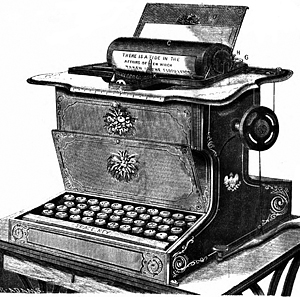
Remington No.1, 1875
The first typewriter to bear the Remington name differed little from the Shoes & Gliddon from which it descended. For the most part, it was the Perfected Sholes & Gliddon sold under the Remington brand. It typed in all capitals, and had lids that covered the keyboard and carriage when not in use.
Remington No.1.5, c1877
The first Remingtons prior to the No.2 did not have a model number designation. They were marketed simply as "Remington" or "Type Writer". For lack of a better identifier, I'm calling this intermediate model the 1.5 so as not to confuse it with the Remington-labeled Sholes & Glidden. As you can see, the sides have been opened, yet the keylevers are covered. Though the carriage and keyboard are the same as its predecessor, the frame has been lowered and elongated.
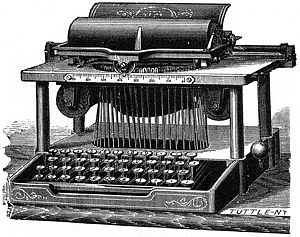
Remington No.2, 1878
This model was a dratmatic departure from the No.1. In shape and size, it more closely resembled what we think of as a "modern" typewriter. It had 39 keys It is historically important as being the first typewriter to be able to type in both upper- and lower-case letters from the same key. It could type a 6 1/2" line.
Remington No.3, 1886
The original No.3 was an experimental model which was never placed on the market. The No.3 later put on the market was essentially the same as the No.5 with a wider carriage that could accomodate paper 14" wide and type a 12" line. Its mechanism is different from other Remington standards in that the rack and escapement positions are reversed, with the rack teeth pointing upward and rocking back and forth while the escapement dogs point down and travel along with the carriage. The advantage of this is that the carriage is incredibly easy to remove, requiring the removal of only two screws. Forty-two keys.
Remington No.4, 1883
An economy model that closely resembled the No.2 but wrote in uppercase only. In appearance, it differs from the No.2 only by the lack of a Shift key.
Remington No.5, 1887
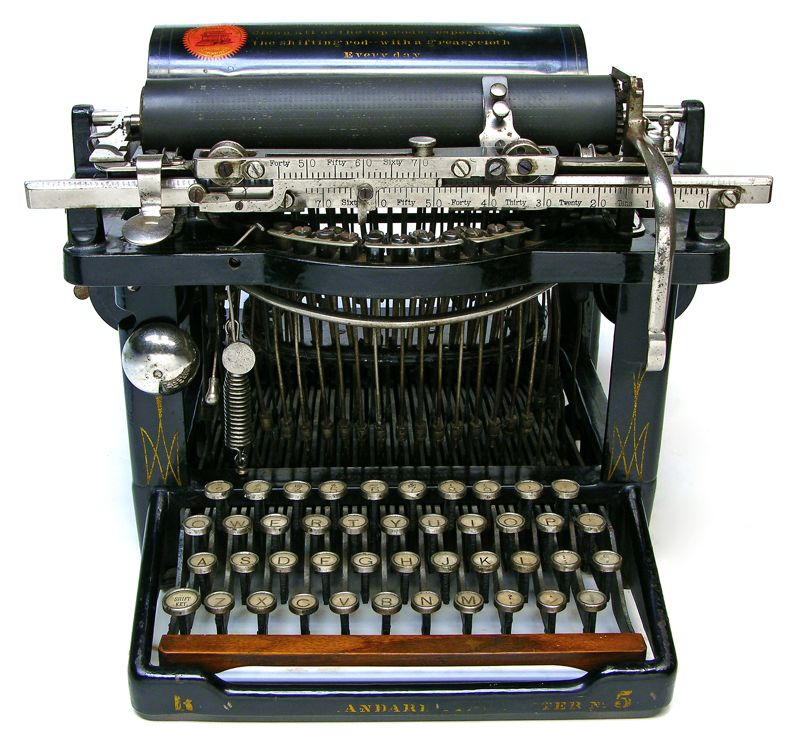
Loosely similar in design to the No.2 and virtually identical to the No.3 save for a shorter carriage. Designed to meet the needs of the European market, it typed 84 characters on a line 7 1/2" long and accepted paper up to 9 1/2" wide. See below for illustration.
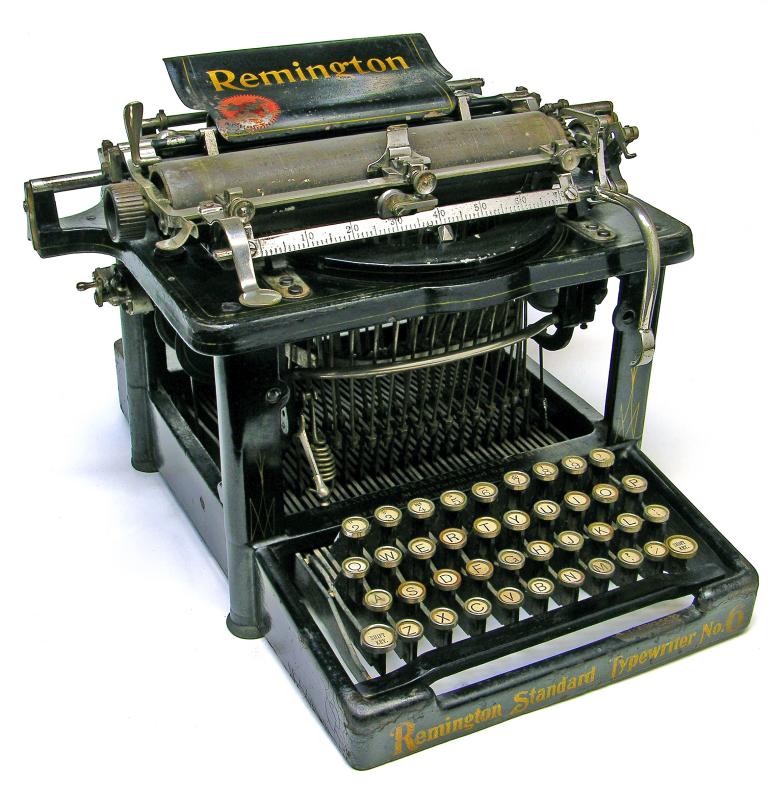
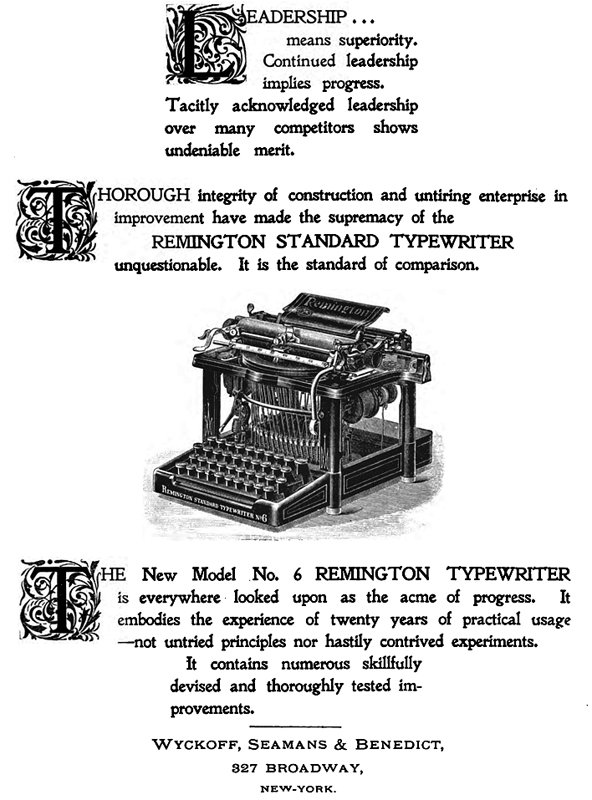
Remington No.6, 1894 - (See below)
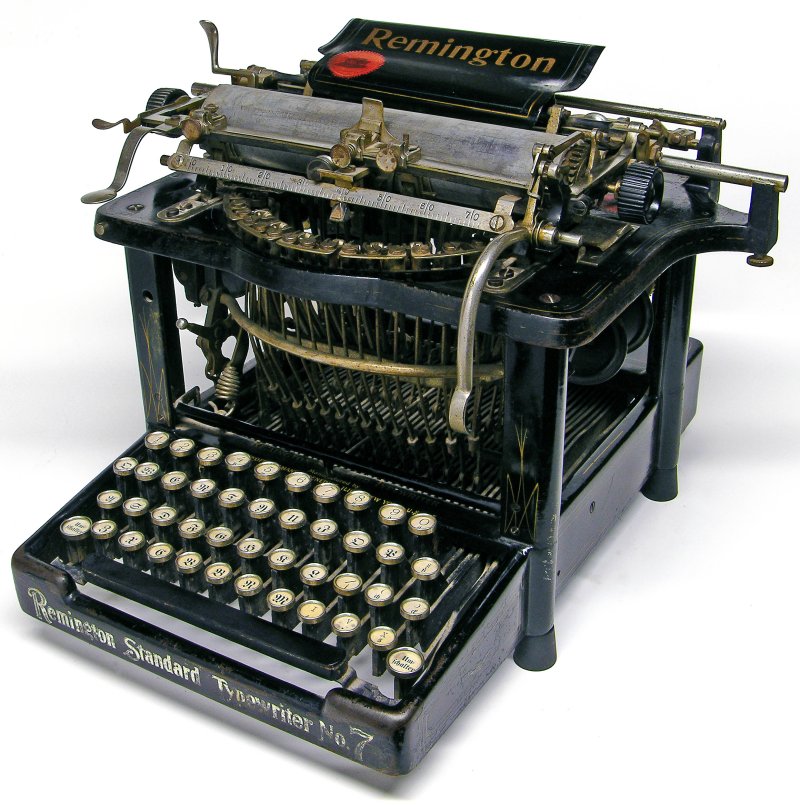
Remington No.7, 1896 - (See below)
Remington No.8, 1897
Wide-carriage version of the No.7 with an exchangeable carriage.
Remington No.9, 1902 - Wide-carriage model available in five different platen lengths.
The Standard No.6 marked the first major improvements in the Remington design since the No.2. Significant changes were made to the carriage design, escapement, and ribbon advance.
The No. 7 is probably
the most commonly found of Remington's "blind" typewriters, about 250,000 having been sold. It differs from the No.6 primarily in the number of keys, having 42 vs the 6's 38.
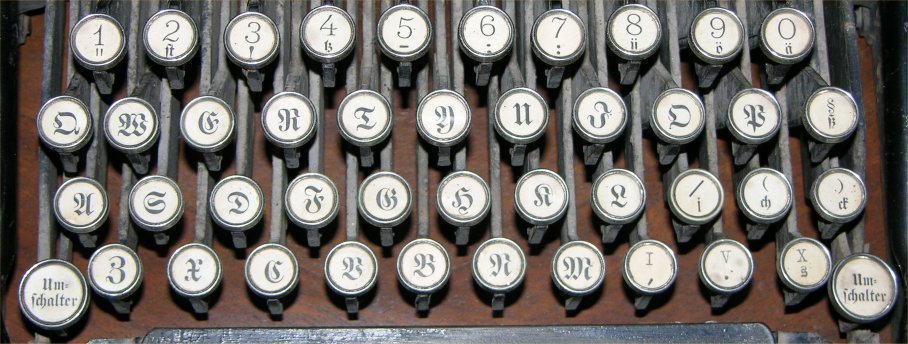
The one shown here
is a highly uncommon German-language version, in the even scarcer Fraktur typeface. Click
here to see the keyboard. This #7 was probably intended for the domestic German-speaking market. Indeed, the No.7 was originally intended as a variant of the No.6 fitted for foreign languages, the additional keys being necessary for diacritical marks, etc. Of course, other uses within the English language were soon found for the extra keys, and it wasn't long before the No.7 outpaced sales of the No.6 within the American market.
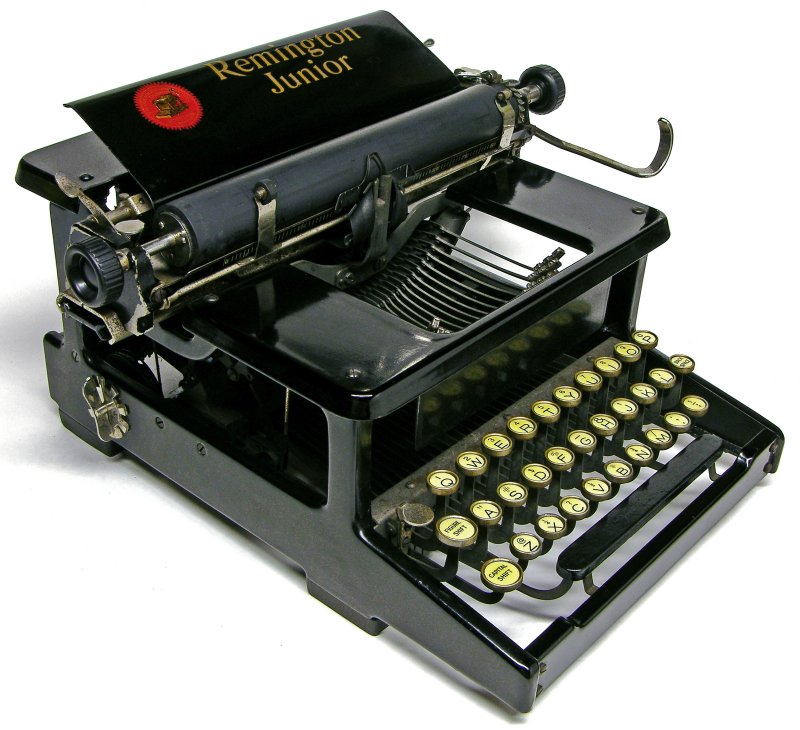
The Junior stands out among Remingtons for how truly unusual it is compared with other Remingtons. Introduced the year after the infamous Union Typewriter Company trust was reorganized as Remington Typewriter Co., the Junior was actually manufactured at Smith-Premier's factory in Syracuse, NY. In fact, the Junior shares many traits with the full-keyboard Smith-Premier No.10, and especially the Smith-Premier Simplex, a stripped-down No.10 that also debuted in 1914. Most notable of these is the placement of the ribbon spools behind the carriage in a vertical side-by-side configuration. The spring drum is also oddly positioned, sitting perpendicular to the carriage with the cable passing down from the carriage along a pulley. The piece that looks like a winding key on a daisy is the spring-tensioner.
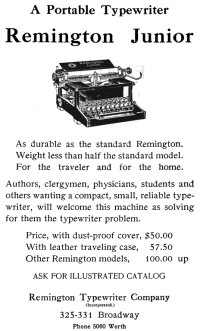
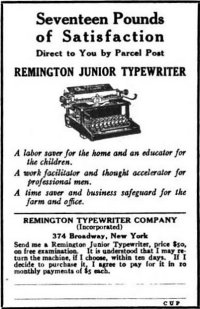
1916 ad for the Remington Junior
Note the extremely basic keyboard. A single set of shift keys, a rudimentary shift lock tab, and back space are the only keyboard controls. The margin release is a lever up on the carriage. A line-spacing toggle behind the return lever is just about the only other amenity to be found.
You may be surprised to find that this is a segment-shifted machine. Though segment-shift had been around for some time (since the L.C. Smith No.2), this is the first application of the technology in a double-shifted keyboard that I am aware of. The type basket shifts down for capitals, and up for figures.
Alhough small, the Junior is not a true portable. Many collectors refer to it as a "luggable", though I personally think that it is best catagorized as a semi-standard in the same vein as the Noiseless 8, SM9, or Studio 44.
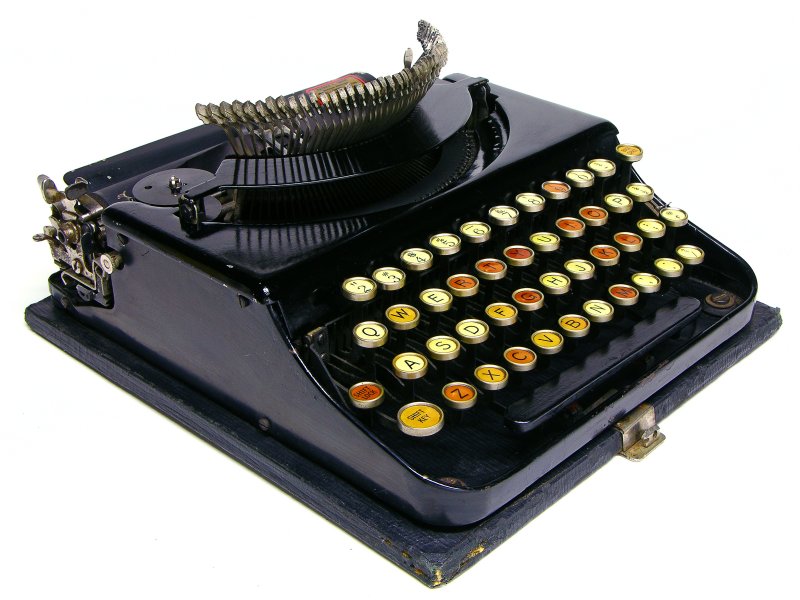
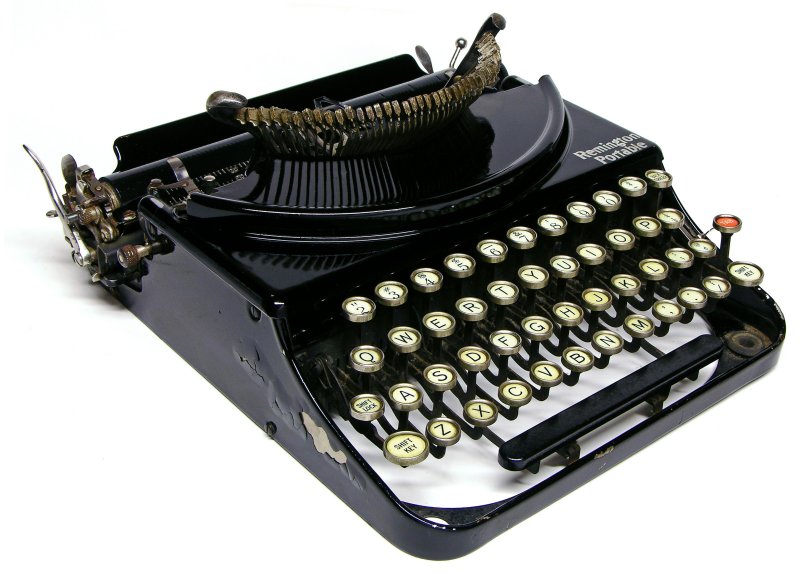
The #1 Portable was the very first true portable typewriter in that it did not have to resort to tricks such as folding up or sacrificing a row of keys to reduce size. One of the most innovative features is its "pop-up" typebars which are raised for use via a side lever and lay back flat for storage. Over half a million were made, making the #1 a fairly easy model for the beginning typewriter collector to find, and in my opinion no collection should be without this milestone in typewriter history.
What makes this Portable #1 stand out from the rest is that it is a very early specimen.
Detail of a 1923 ad for the Remington Portable (click to enlarge)
During its first year of production, The #1 was made in limited quantities, and had to be special-ordered; it could not be purchased from a typewriter dealer until October, 1921. During this time, several design elements were changed as Remington worked out the kinks of this rather experimental little machine. The machine above contains all of the very earliest features except the method used to secure it to its base. A complete rundown of the changes can be found on Richard Polt's in-depth overview of this model.
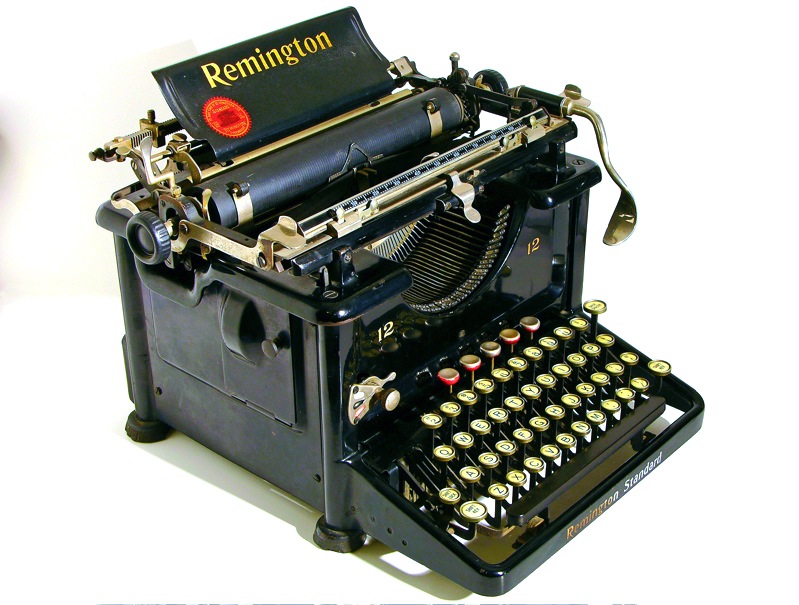
Less collectible than the #10--Remington's
first visible type design and last open-framed machine--but the #12 was
certainly built to last and is quite attractive nonetheless.
Not quite a Portable #1 and not quite a Portable #2, the Compact was a model for the European market. Most were apparently made at Remington's London factory, but this one sold through their Berlin branch is labeled "Made in USA" on the back. Note the single left-hand shift and crinkle paint, typical of this variation. The absent right-hand shift was common with European and export models well into the 1930s and should not be mistaken for an early Portable #1.
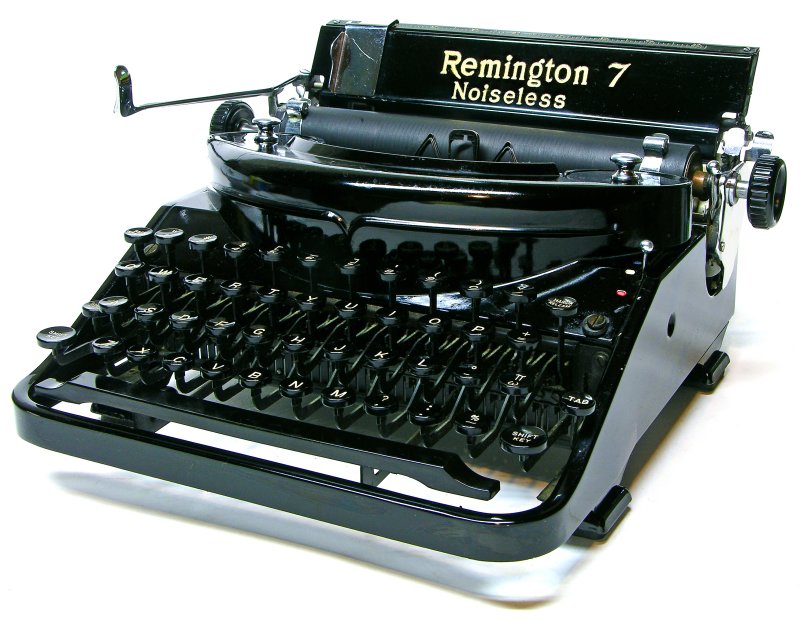
The Model 7 was a larger version of the Noiseless Portable, a semi-standard in the same vein as the Noiseless 8. It's more fully-featured than the portable, yet small and light enough to easily put in a case and transport.
They keyboard is outfitted for electrical engineering. It's original owner was an electrical engineer in the iron and steel field. I imagine his choice of career was inspired by his father's position as a director of the famous Reading Railroad.
Note: the following portable typewriters are members of the highly complex Remie Scout family. Please see my companion page All About the Remie Scout for complete information on this product line.
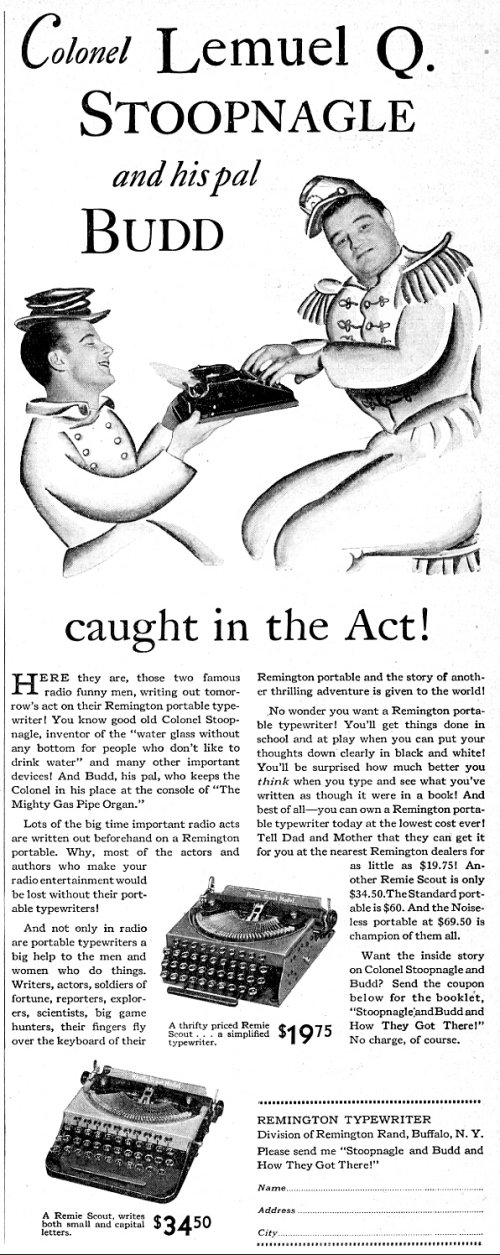
1933 ad for the Remie Scout featuring the comedy duo of Stoopnagle and Budd
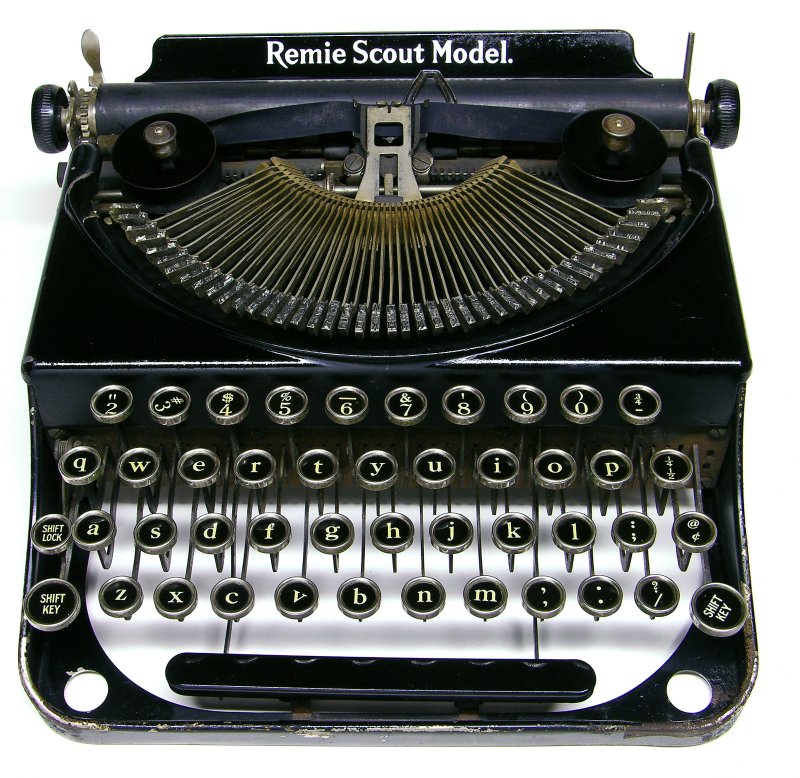
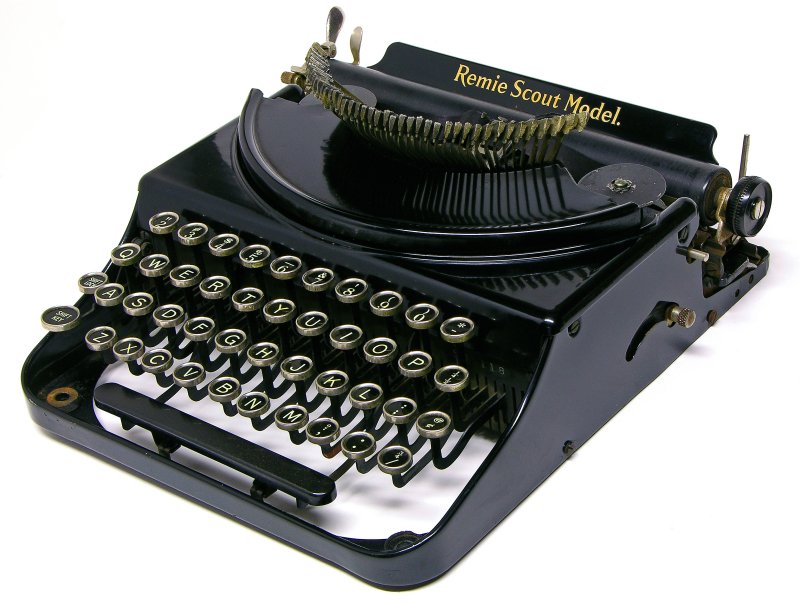
Another inexpensive Depression-era portable, it is based upon the Remington Portable #2, minus several convenience features. See the Monarch Pioneer below for the caps-only, open-frame version of the same typewriter. Note the lowercase lettering on the keys. These seem to be present only when a Remie Scout has two shift keys (a single shift on the left was the norm) or when a Monarch/Monarch Pioneer has only one shift key (dual shift keys being standard for that line). Whether the number of shift keys was tied to the keyboard lettering option chosen by the consumer or vice-versa is unknown.
Additionally, while the majority of the Remie Scout family featured a pleasant, elegant san-serif typeface called art gothic (see the Apologia for an example), this particular specimen has the standard Roman typeface found on other Remington portables. It also lacks a carriage return, the platen having to be manually advanced by turning. (See the Monarch below for more on this unusual variance.)
The wide number of small design variances spread throughout the model family gives evidence to an experimental product line, or at least a product line that relied less on a standard build so much as parts on hand.
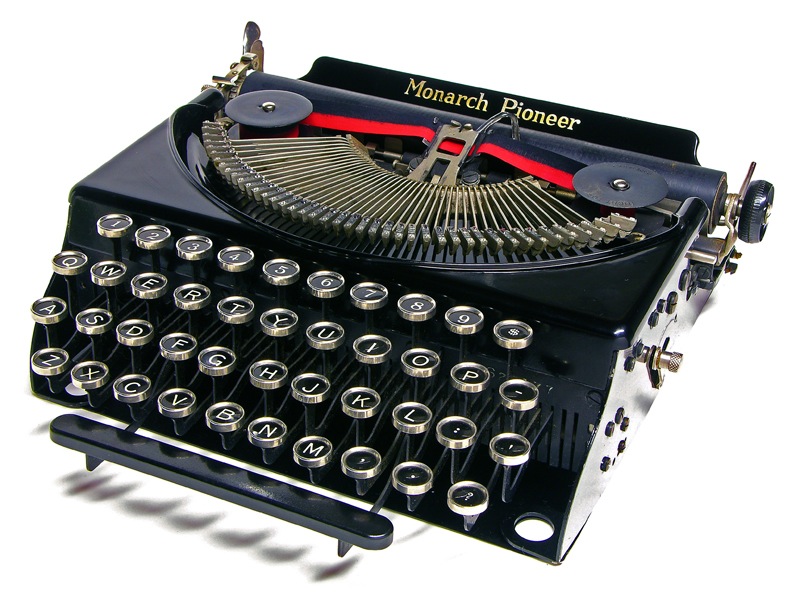
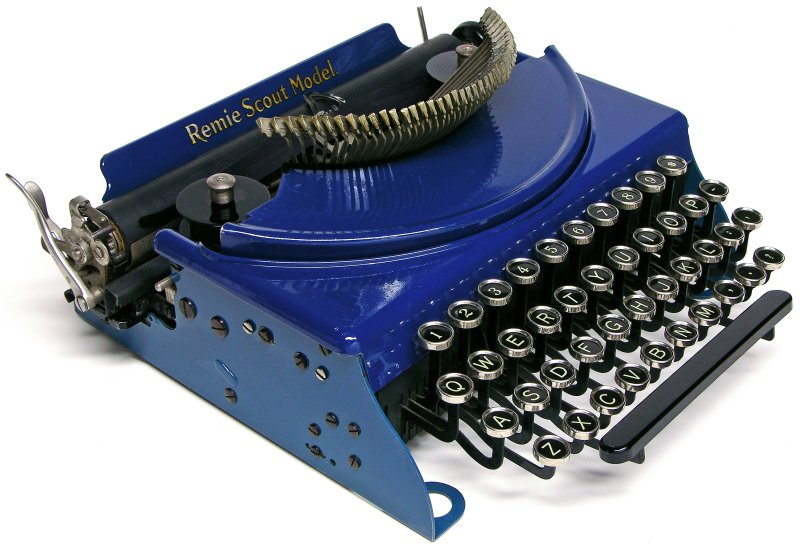
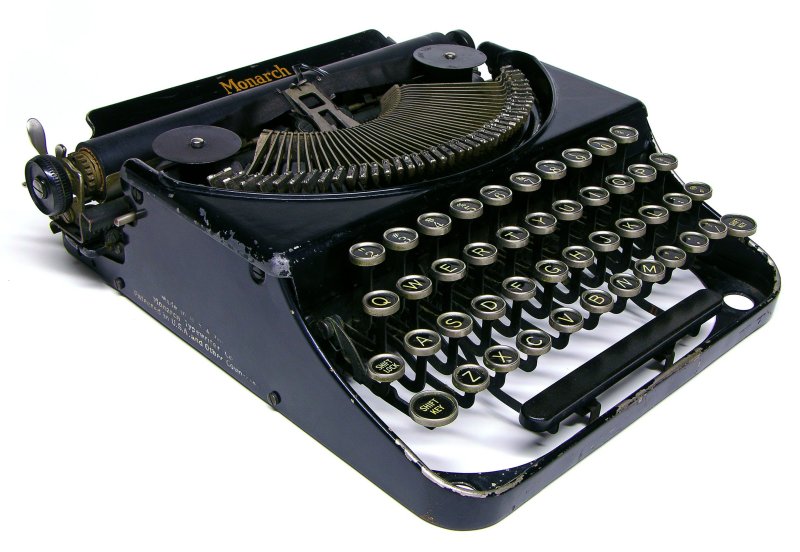
Not to be confused with the later Monarch pioneer based upon the Remington Portable #3, the upper typewriter is one of eight known name variations of the Remie Scout. To make matters more confusing, the Remie Scout itself was available in four different versions, giving collectors 32 possible combinations to look for! Additionally, they could be had in four different colors, such as this two-tone blue Remie Scout. (See All About the Remie Scout for more variations.)
This particular model is the cheapest, lowest-end of the four versions, being caps-only with a no-nonsense, san-serif typeface, and having no protective front frame around the keyboard. Though the option of a case was available for extra, it often came with just an oiled cloth cover. It's not surprising that so few survived. It was marketed as a "child's typewriter", though that was most likely a euphemism for "inexpensive". It sold for $19.95.
Another of the Remie Scout family's many name variants, this specimen is anomalous in many ways. Most obvious is the presence of a left platen knob, and lack of a carriage return lever. Like the later Monarch Pioneer and Cadet, the user had to push the carriage to the right and manually advance the paper one line. Only a few other examples of a Remie in this carriage style is known. (Click here to see the carriage difference in detail.)
To add to the curiosity, the right platen knob is a small, smooth piece of hard resin, not unlike a checker piece. Like the regular Remie, there is only a left margin set, but on this Monarch, the margin is variable, whereas it is normally fixed.
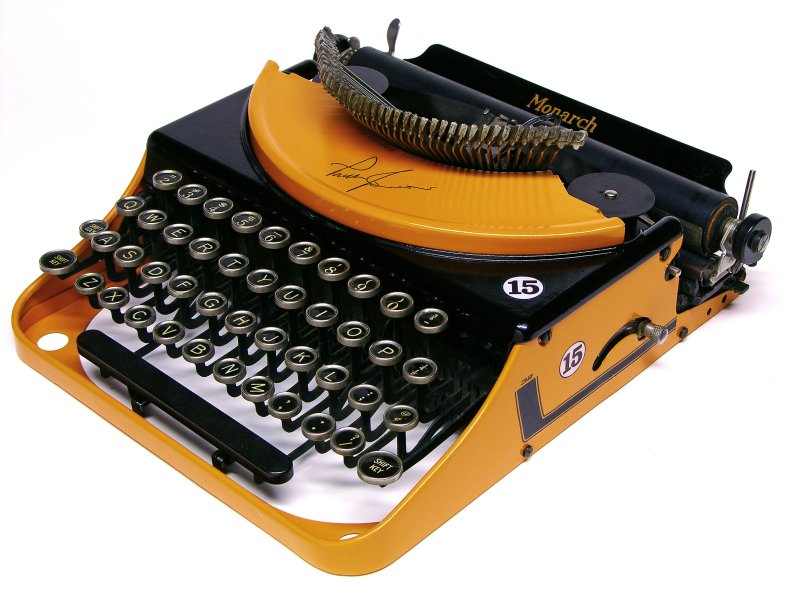
Update: due to the poor condition of the original finish, this typewriter has been repainted and reborn as the Parnelli Jones edition Monarch:
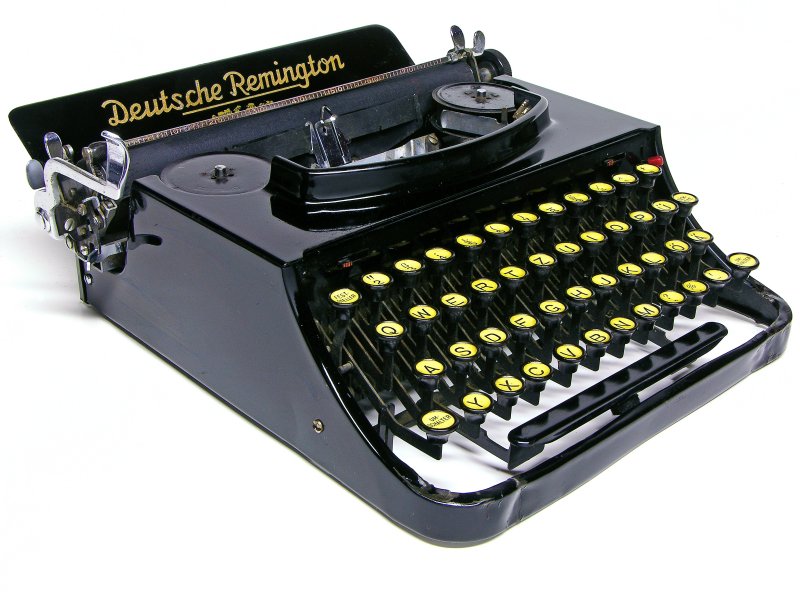
In 1931, as Torpedo-Werke AG was faltering admidst the global economic depression, Remington-Rand purchased majority share in the company. The first new product of this merger was 1933's Model 17, manufactured in Torpedo's Frankfurt factory under the new corporate moniker Remington Buromaschinen GmbH. At least some, such as the example shown here, were labeled Deutsche Remington.
The Typewriter Serial Number Database insists that the serial number belongs to the Model 15's sequence, but the design and all available documentation indicates that this is a rebadged Model 17.
As a little historical background, this unit was sold by an A. Schrimpf of Munich. 1933 was the year Adolf Hitler was appointed Chancellor of Germany and his Munich-based National Socialist party siezed power. In March, the first concentration camp opened at Dachau, 10 miles from Munich. Imagine the atmosphere that must have gripped the city at the time this little schreibmaschine was purchased off the shelf of Mr Schrimpf's office supply store on Prielmayer Street! As best I can tell, it was located just a few doors down from the historic Staatsministerium der Justiz building, where the Nazis perverted justice as a means of incarcerating Jews. If only to know the things this typewriter saw!
The BB serial number code and a few other features tell us that this was a Remington sold through the Butler Brothers department stores. Only a few thousand were made as near as anyone can tell. According to Richard Polt, Remington's own serial number data does not match those of any Butler Bros editions seen so far!
While to all outward appearances a Portable #2, closer examination reveals that it also shares some traits of the Portable #3. The Portable #2 has four additional side screws exposed; here and on the #3 they are hidden behind the outer shell. The Portable #2's paper release lever is a simple bent wire; here and on the #3 the lever ends in a little ball. The #2 has no paper fingers on the front of the platen; this and the #3 have identical paper fingers.
Most #2s don't have a tab key, but later ones do. Likewise, most #2s did not have a right-hand carriage release lever, but later ones did. Photos I've seen on the later #2 seem to still have only a single lever, just moved from left to right. This Butler Bros and the #3 have levers on both the left and right.
So is the Butler Brothers edition simply a #2 with its own serial number sequence, or an entirely different typewriter altogether?
This particular specimen has the unusual feature of three prongs that pop up out of the platen at the press of a button. Presumably, these are to help hold index cards or something similar.
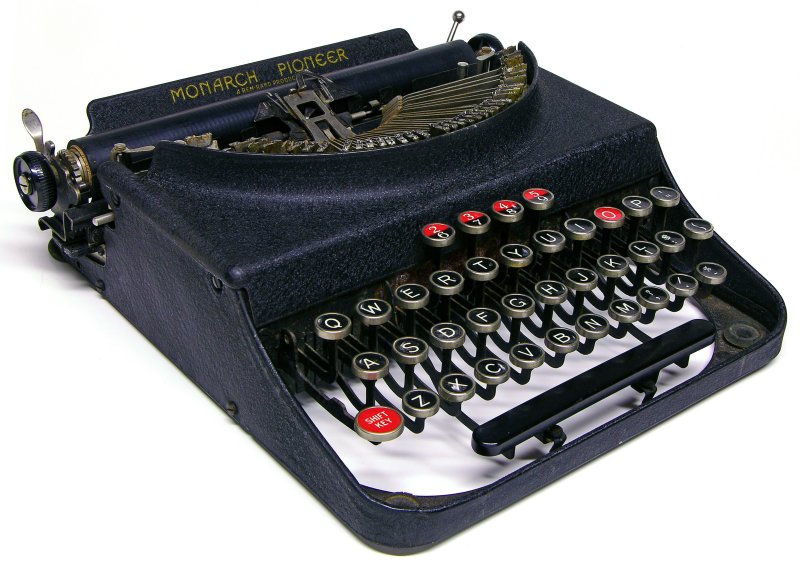
Do not confuse this with the Monarch Pioneer shown above! It is a totally different machine. Yet another in Remington's cavalcade of Depression portables, this Remington-Rand version of the Monarch Pioneer is based on the Portable #3 and seems to have taken its keyboard from the discontinued 3B's leftover stock. Notice that the "O" is to be used in place of zero, and it curiously points out that lower-case "L" is to be used for "One". I say curious, because the l/1 arrangement was the norm back then, and there should have been no need to make a special key drawing attention to it. I also wonder why the lower half of the key is not red like the other numbers.
The 3 1/2-row Monarch Pioneer was made for only four months, from October, 1937 to Jan, 1938. Its red keys make it an especially attractive target for keychoppers, so if you come across one, be sure to do your part to keep it out of their clutches.
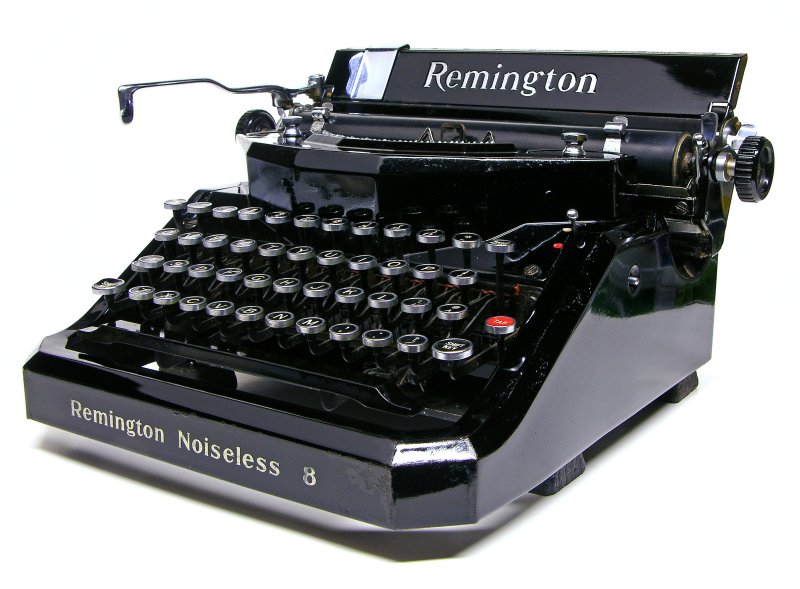
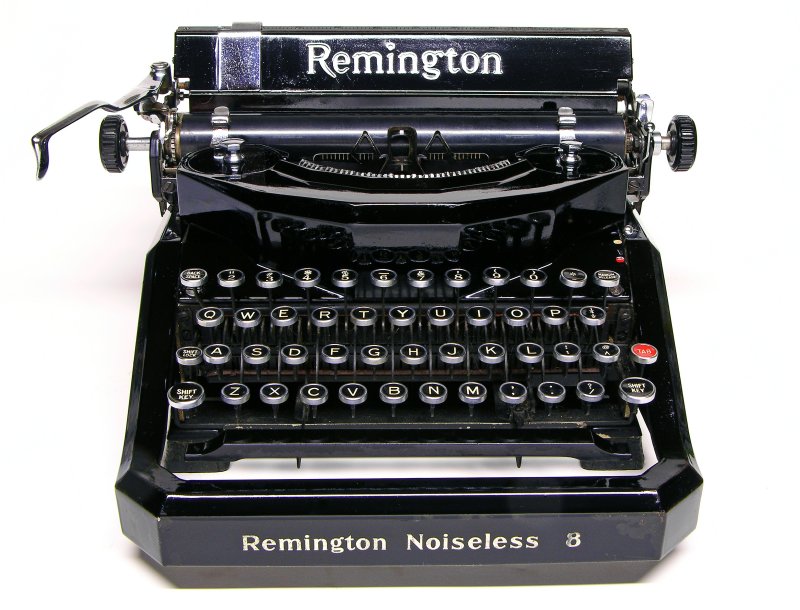
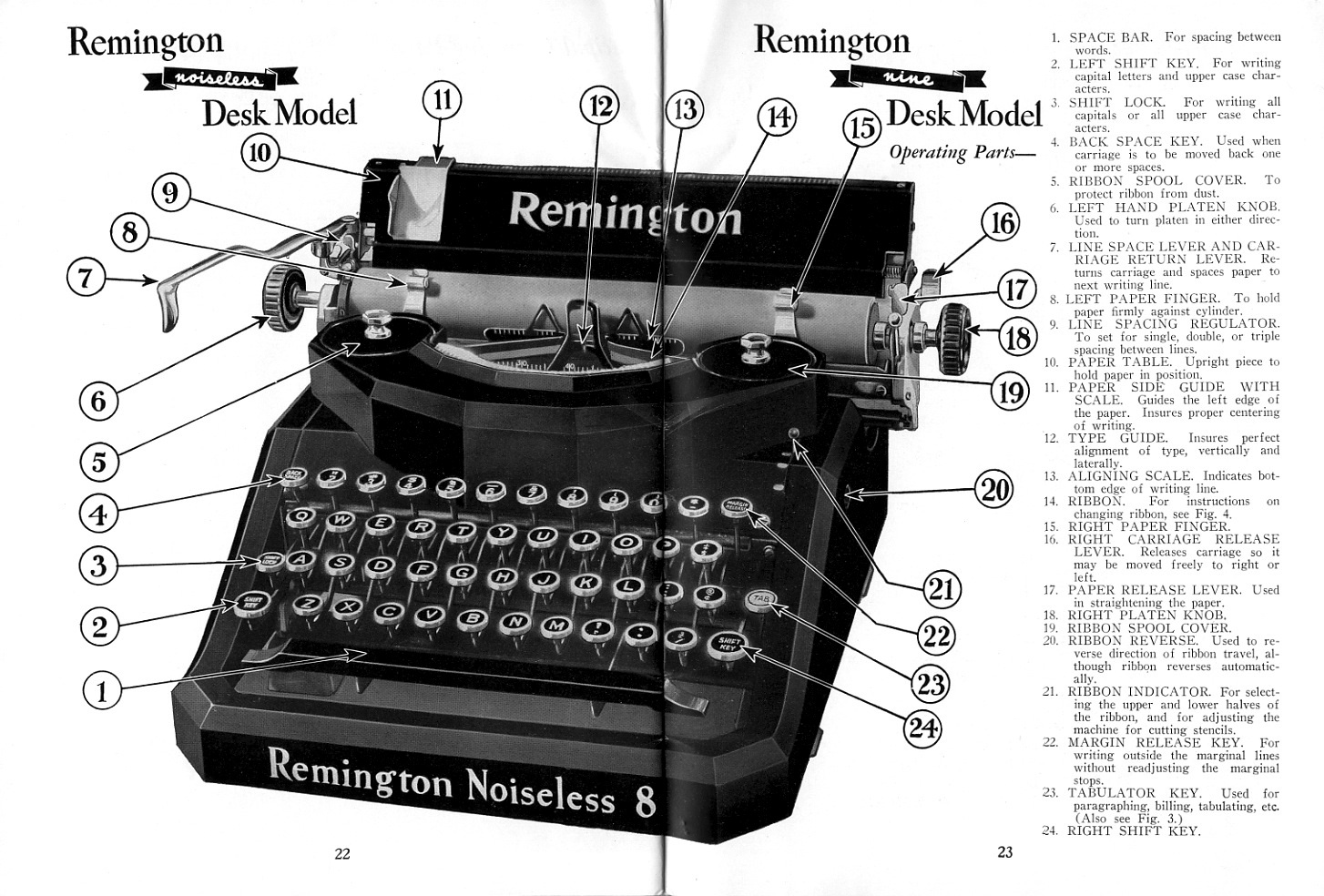
In size, the Noiseless 8 falls between being a portable and a standard typewriter. It is, in Olivetti's nomenclature, a semi-standard. It was specifically targeted toward smaller offices that did not have the room for a big, heavy standard Noiseless but needed more features than a portable could provide. It's easily one of the most Art Deco typewriters Remington produced, right down to the hexagon knobs atop its ribbon spool covers.
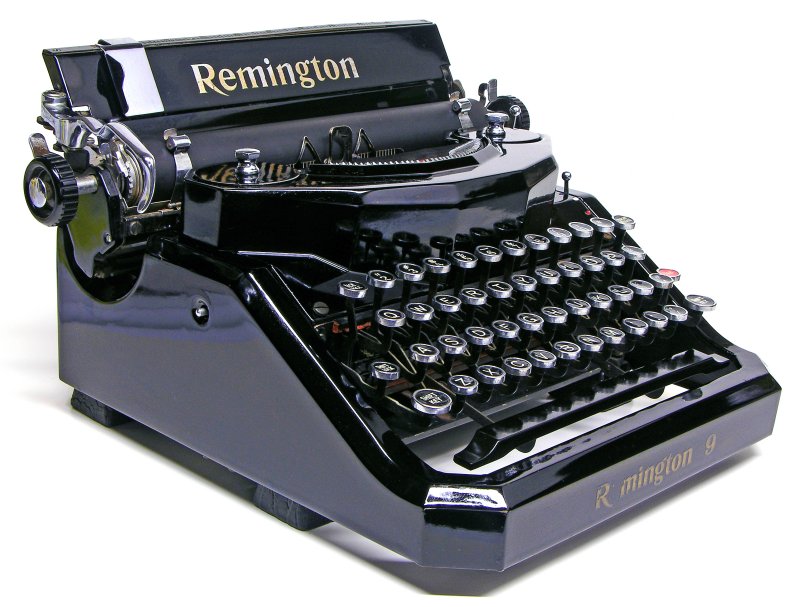
The Remington 9 was a low-production alternative version of the Noiseless 8 made without the weight-driven Noiseless mechanism, similar to Remington's "noisy Noiseless" Model 1. Save for that and a non-embossed paper tray logo, it is otherwise identical to the Noiseless 8.
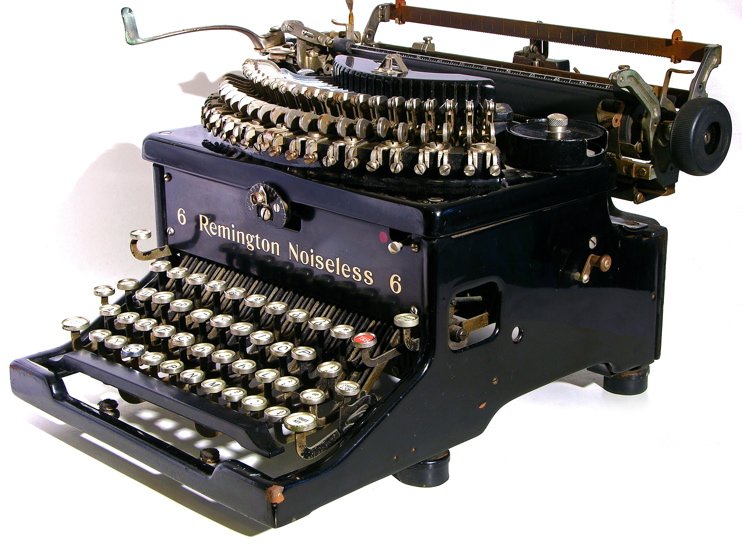
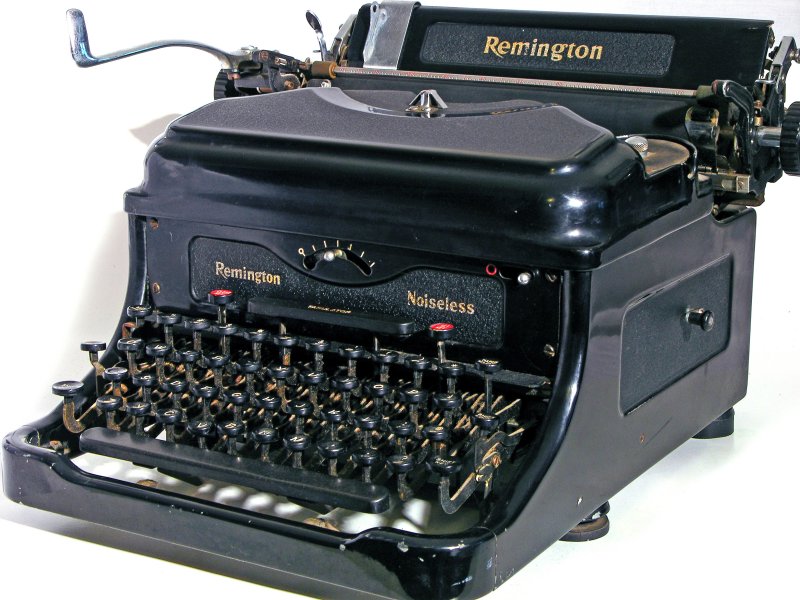
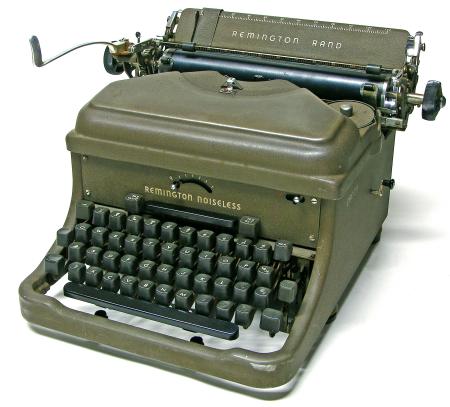
The second-to-last incarnation of the Noiseless was produced virtually unchanged for almost two decades. This is one of the heaviest, most solid machines I own. It's built like a tank, kind of looks like one, and at the keyboard you kind of feel like you're operating one. This is a serious workhorse.
As with the Noiseless No.6, the dial on the front adjusts the carriage very slightly forwards and backwards to accomodate multiple sheets of paper. This is often mistaken for a touch control. When using only one or two sheets of paper, the dial should be in the far left position or just before it; otherwise, the typebars may fail to strike the paper and the user may mistakenly think that something's wrong with the typewriter.
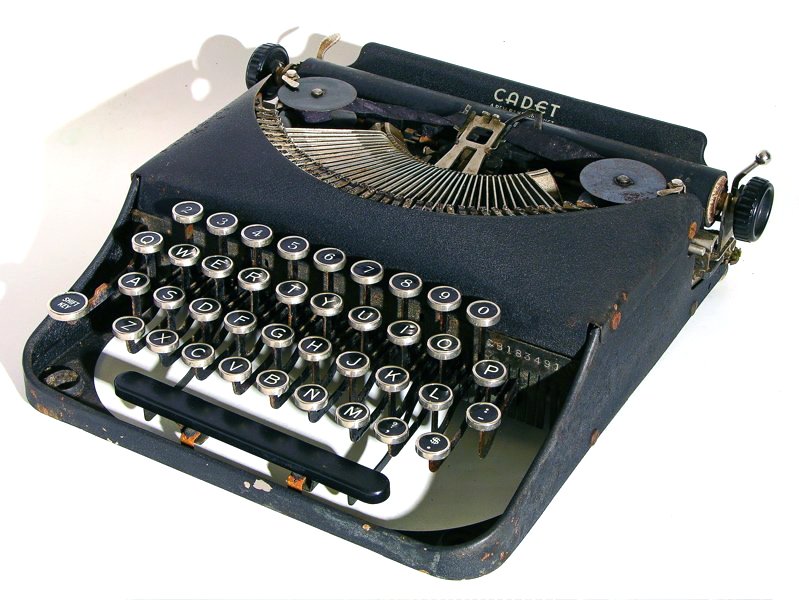
This seems to be a rename of the 1937 Monarch Pioneer (not to be confused with the Remie Scout rebadge of the same name), with the improvement of a full keyboard. Like its predecessor, the Cadet is based on the Remington Portable #3.
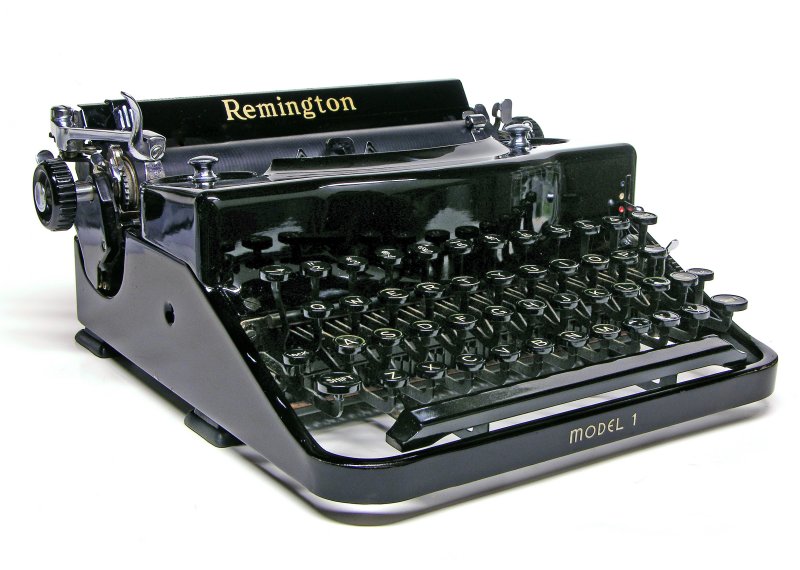
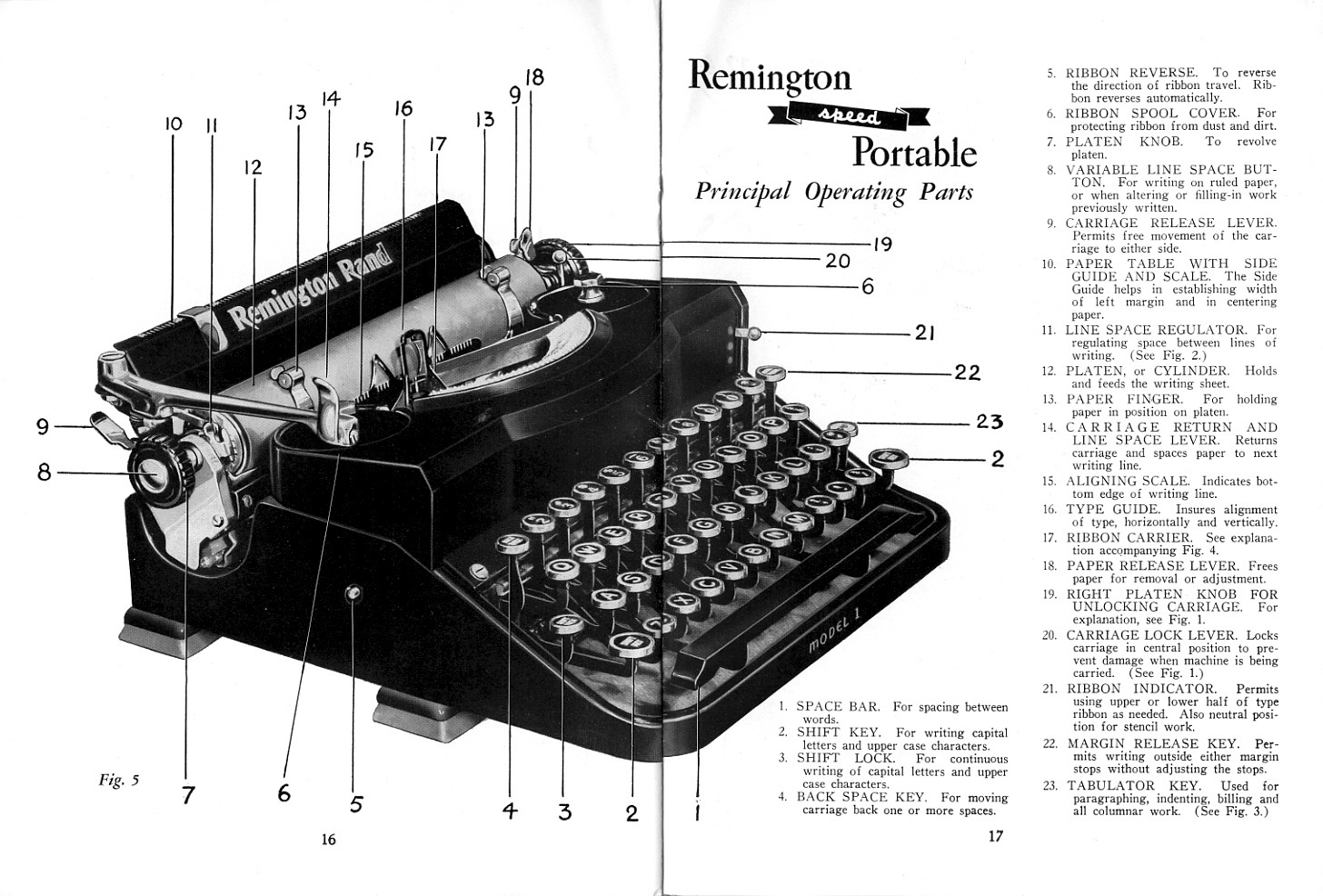
The Model 1 uses a mechanism similar to the Noiseless Portable, but is not actually noiseless. It was referred to in Remington ads as the Speed Portable and "noisy noiseless". It originally sold for $64.50, which Consumer Reports called "considerably overpriced" given its loudness and poor imprint quality. I'm personally quite pleased with its performance, and its much quieter than many other portables from the era.
The same machine in a slightly different housing and with a red tab key was sold as the Remingon-Rand Model 1. The Remington-Rand Model 1 is found much more frequently than the Remington Model 1, three times as many having been made.
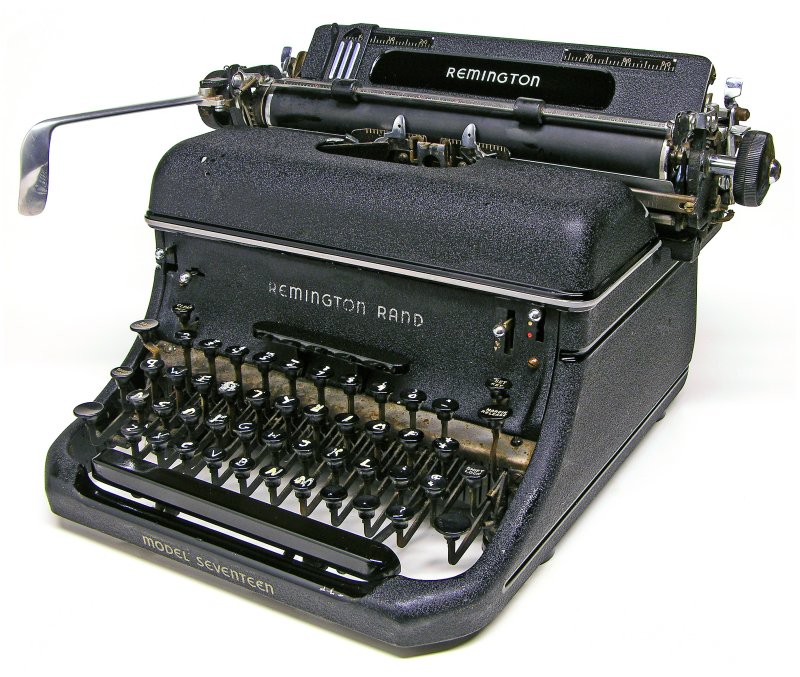
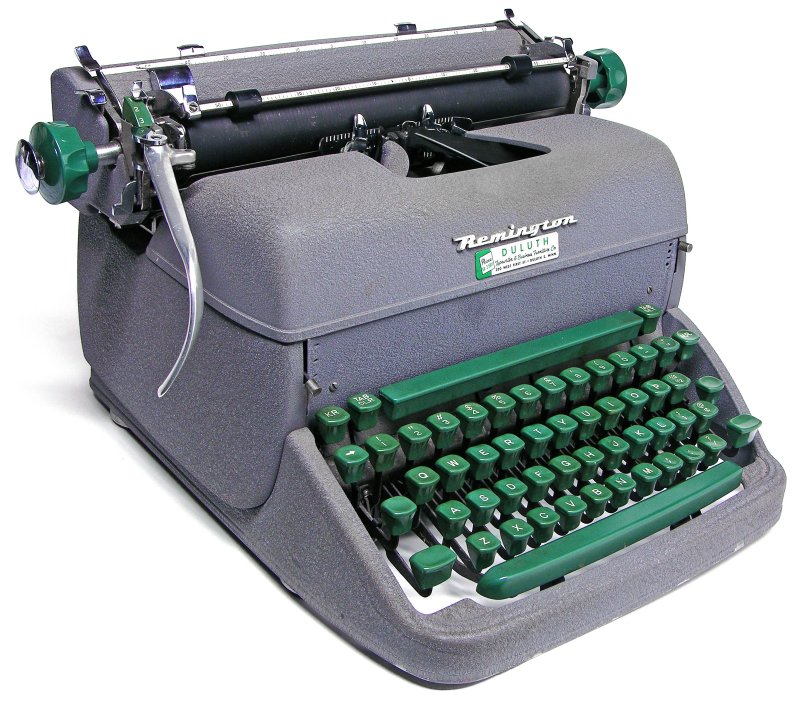
Sometimes alternately labeled "Model 17" or "No.17" or not labeled at all . The model debuted in 1939 and became the primary workhorse for government offices during WWII. In 1947, it was renamed the KMC (for Keyboard Margin Control). The model was discontinued in 1950.
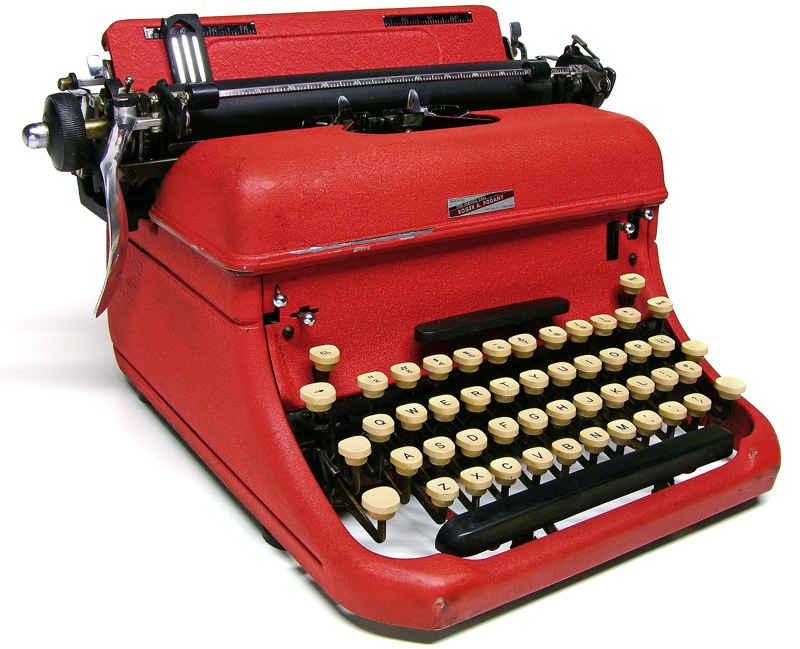
The story behind this bright red world traveler is that it was purchased by a serviceman at a PX on a US Army base in Turkey. It traveled with its owner to Korea, and eventually back to Minnesota, where it turned up in Minneapolis. Obviously, it's been repainted, and possibly rebuilt. The keys look like Smith-Corona keys, but I have seen similar keys on later Remington standards; either way, they aren't original. The tag on front is for Roger A Podany's typewriter service, at 7 W Lake St, Minneapolis, who may have done the alterations. The site is now part of a K-Mart parking lot. (Mr Podany, incidentally, is still alive and has been the proprieter of Office Equipment Warehouse, Inc since 1976.)
Here is another paint scheme variation. Like the red one above, this 1943 model was rebuilt and repainted sometime in the 1950s, when the person whom I got it from acquired it. The snazzy red logo was first adopted by Remington Rand around 1950 and remained in use until at least the early 1960s. Although I have several typers from the '50s that sport a similar Remington logo in chrome, I've never seen another quite like this.
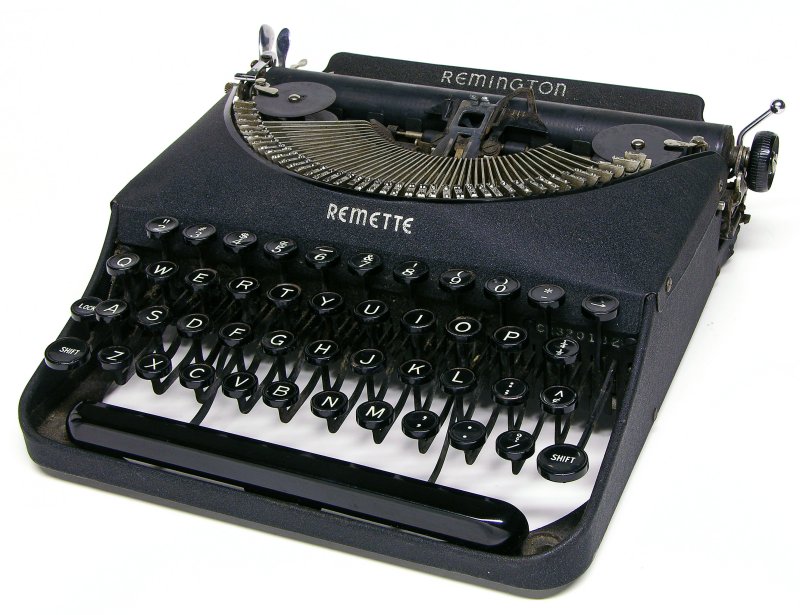
The Remette was made from 1938-1942, specifically as a competitor to Smith-Corona's Zephyr travel typewriter.It seems to be based upon the Cadet, but with additional features that bring it more in line with conventional portables of the day, albeit in a smaller package. A Consumer Reports Best Buy in 1941. It is nonetheless still a very limited machine.
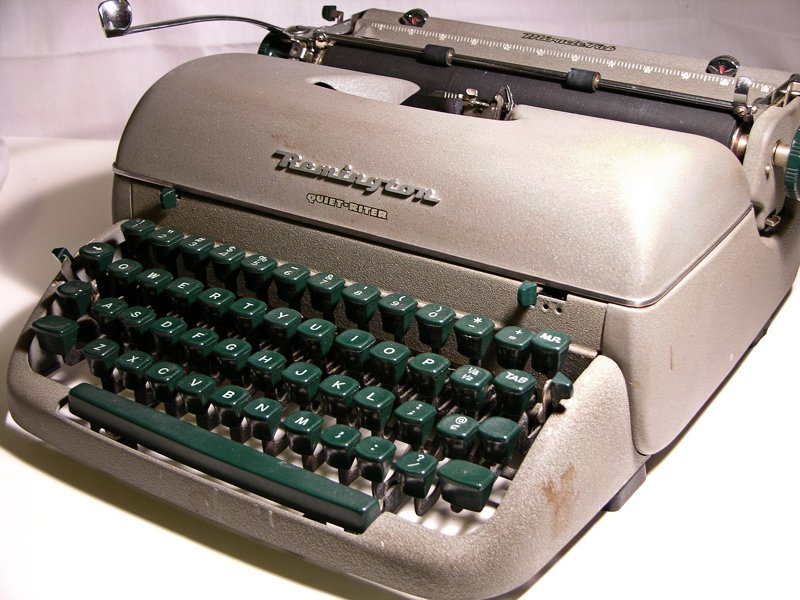
The Super Riter is the direct descendant of the Seventeen and KMC models. Mechanically, all three are nearly identical under the shell. Noteably, the Super Riter seems to take a step backwards, abandoning the automatic margin set mechanism for old-school manual margin sets behind the paper tray. The change may have been repercussions from the patent infringement lawsuit Royal won against both Remington and Smith-Corona for ripping off Royal's Magin Margin system.
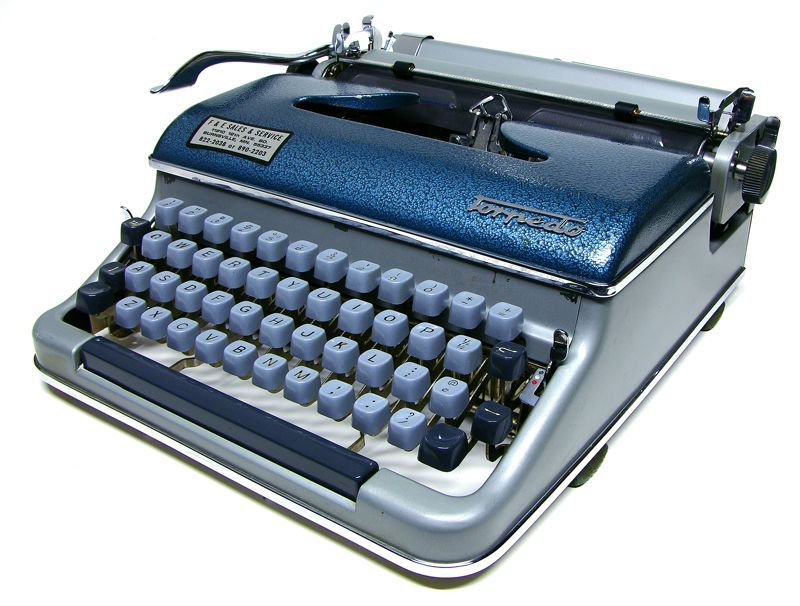
The difference between the model 18 and 18b is that the 18b has a tabulator and the 18 does not. The Torpedo 18/18b was the last true Torpedo manufactured in Germany by Torpedo Buromaschinenwerke. The company, long partially held by Remington-Rand, was by this time a wholly-owned Remington subsidiary. After the 18/18b line ended in 1964, production was moved to Holland. Although the Torpedo name would be revived on a handful of later models, none matched the quality and precision for which the brand was legendary.
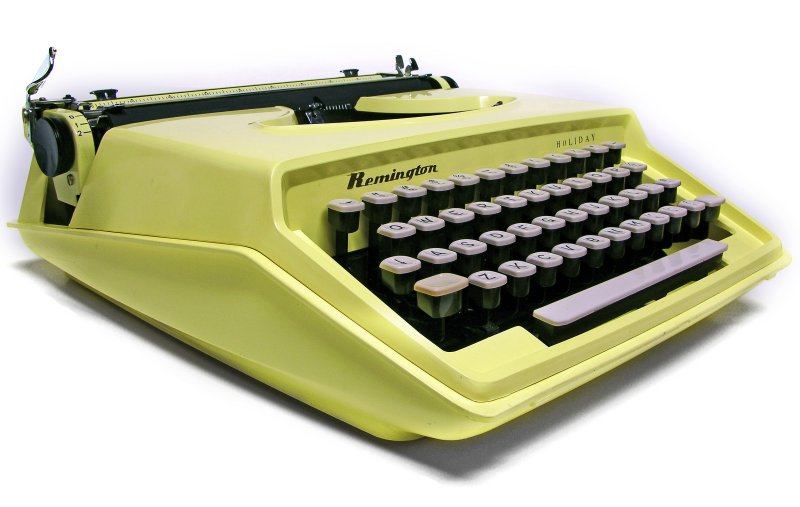
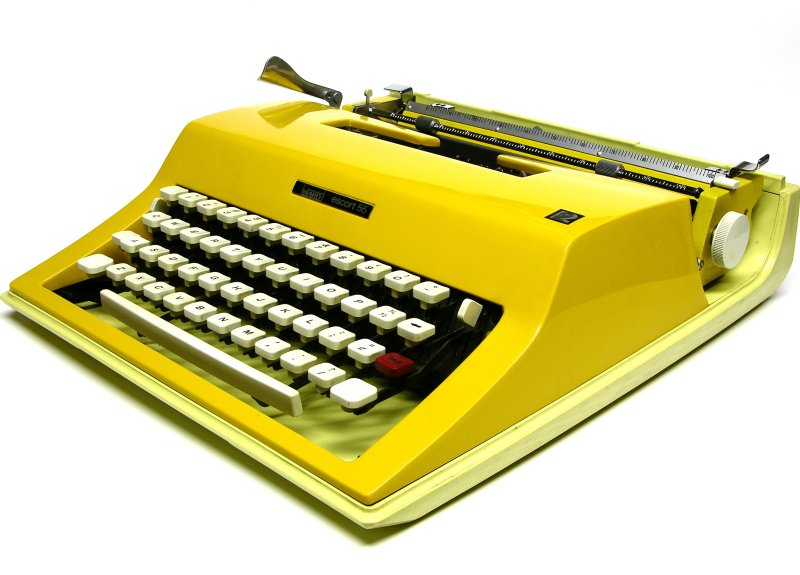
This inexpensive, Holland-made portable represents the waning days of Remington's typewriter business.It is an extremely basic machine, with no tabs, paper support, or soundproofing. The case (and possibly the entire plastic housing) was made in Italy. The case (a top-only design which snaps onto the bottom half of the typewriter) and shell are so similar to my Olivetti-made Escort 55 that it would not surprise me if it was the same company. I wouldn't be surprised if the Holland factory which built this is the same one that built Royal's late portables.
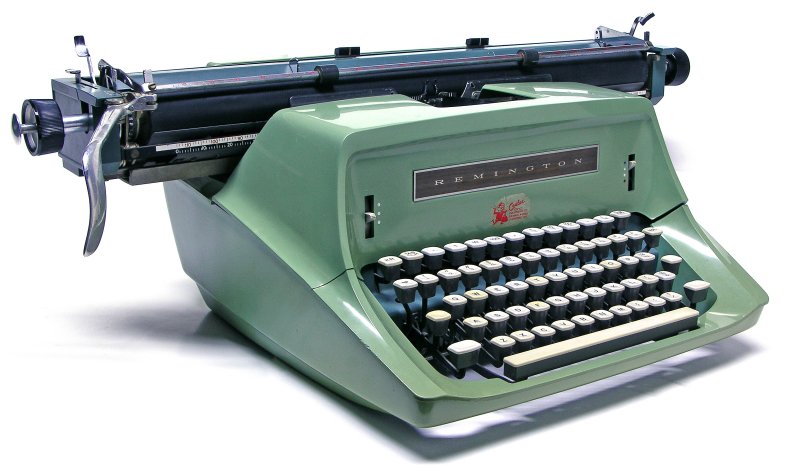
This critter is big. Really big. The wide platen that you might be thinking is 14" is really 20". The overall carriage length is 26". Look again and you'll see that there are five rows of keys--the top row is a 10-key decimal tabulator. Obviously, this machine was used for accounting work of some sort. It's fitted with Double Gothic typeface, which was popular for banking and check-writing because of its legibility.
One mechanical innovation of interest is a type impact control mechanism that transfers the keylever momentum via cam lever into a precise, uniform amount of energy to actuates the typebar. Think of the way that a camera delivers the exact proper amount of energy to activate the shutter for a predetermined amount of time, regardless of how quickly or slowly the user depresses the shutter release. The result is a snappy feel and uniform type impression.
Surprisingly, the housing is made of plastic, and as you can see the ribbon cover doesn't fit quite right. One of the plastic tabs that holds it on is broken off. In spite of ample soundproofing material, it's about as loud as one would expect a plastic-shelled standard to be, and the gargantuan carriage advancing thunka-thunka only adds to the din. This is a machine for rattling the rafters.
The excessive body size reminds me of the Royal Empress, and I wonder if, like the Empress, this wasn't an intentional strategy to be able to use the same housing on electrified models.































 Remington No.1.5, c1877
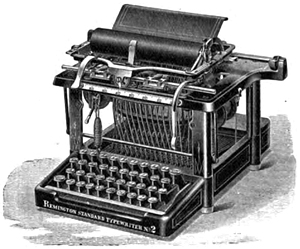 Remington No.2, 1878
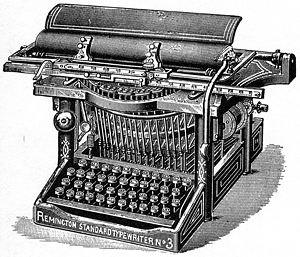 Remington No.3, 1886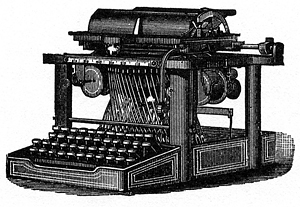
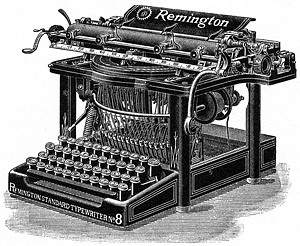
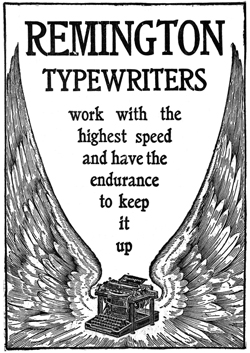 The No. 7 is probably
the most commonly found of Remington's "blind" typewriters, about 250,000 having been sold. It differs from the No.6 primarily in the number of keys, having 42 vs the 6's 38.
The No. 7 is probably
the most commonly found of Remington's "blind" typewriters, about 250,000 having been sold. It differs from the No.6 primarily in the number of keys, having 42 vs the 6's 38.