|


 




















 
Other pages on this site:

Collapsing World: a blog

Conley Cameras


a history in postcards
Vintage ocean liner postcards

My non-typewriter photography
Genealogy, with a focus on the Seaver, Bilyeu, Amidon, and Lowell branches
This site is copyrighted. Please don't use any of the materials here without my permission.
|


|
Underwood #3
Serial # 96665-26
1923
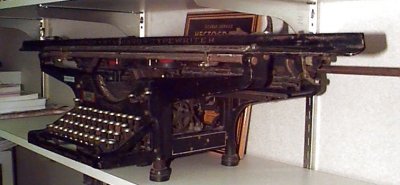
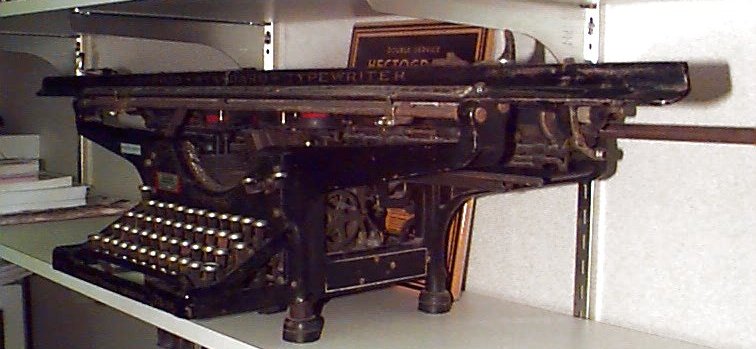
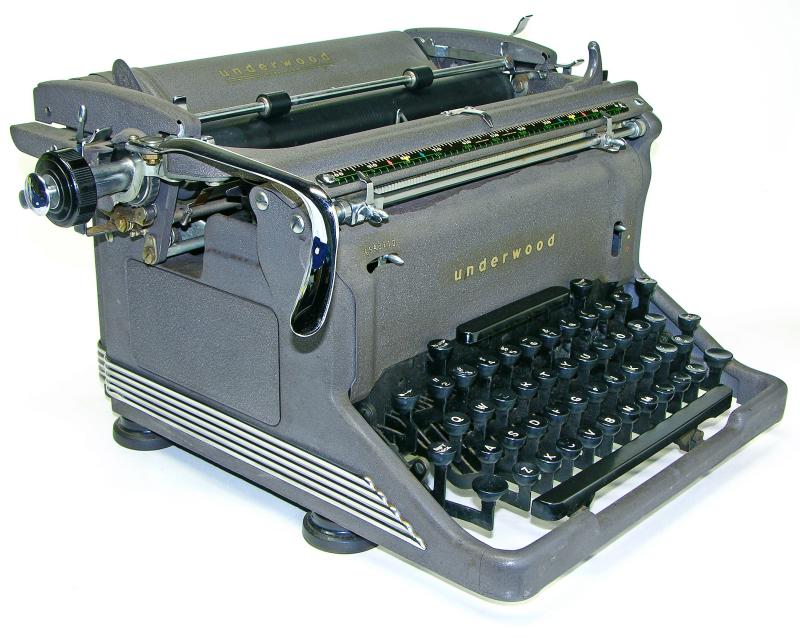
An accounting typewriter with a 26" platen,
designed to fit ledger sheets. Overall, it is 38" long! |
Underwood #5
Serial # 1488329
1926
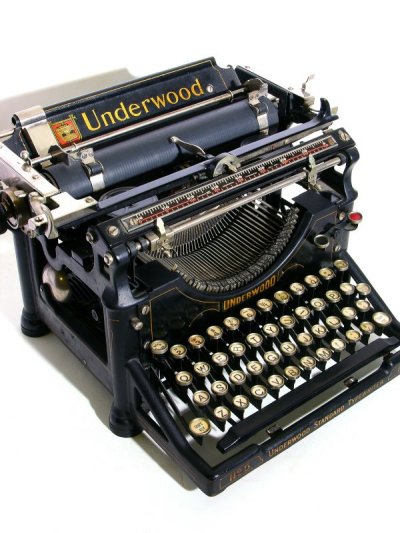
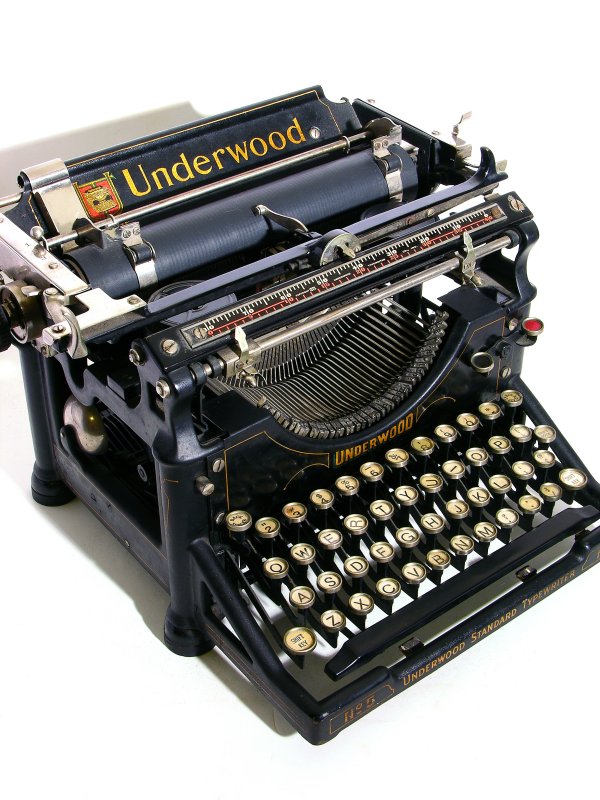
The classic. This is the machine which started
my collection, and the machine I learned to type on. I found it in my grandfather's
basement after he passed away. The Underwood
#5 is what most people think of when they think of old manual typewriters. One
of the most popular lines ever, with over 4 million sold. The Commodore 64 of
the '20s.
Download the manual for this typewriter here. |
Underwood Standard Portable
Serial # 209815
1929
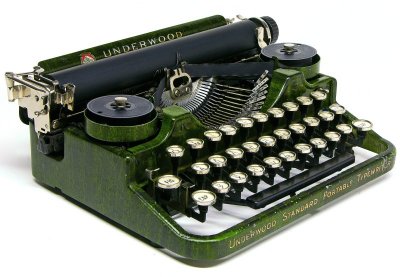
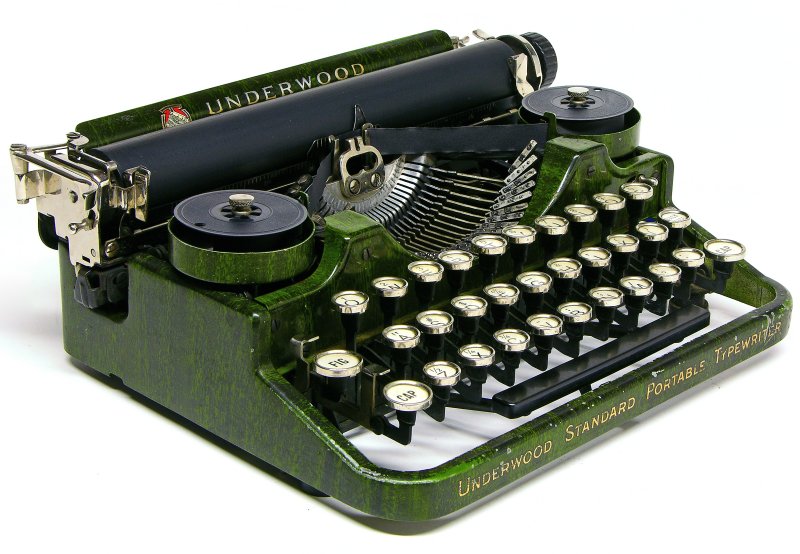
I saved this 3-banker from a keychopper. What depraved, heartless person would cut the keys off this little gem and toss the rest of it in the trash??
Download the manual for this typewriter here. |
Underwood Portable
Serial # 526893
1931
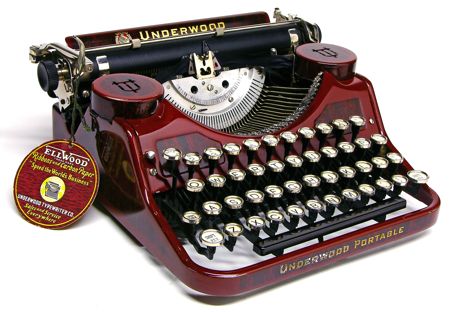
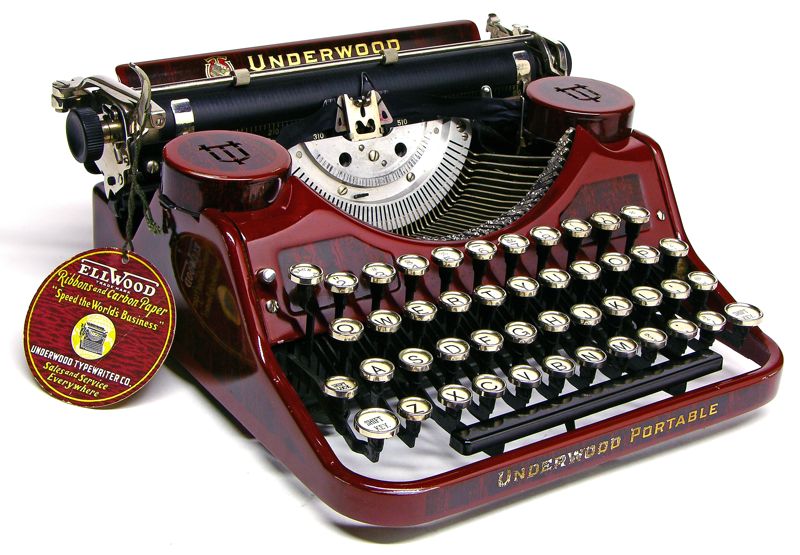
Some lucky boy most likely received this as a Christmas present in 1932, for the date of purchase written inside the case was Dec 17, 1932. He took extremely good care of it; it looks and works almost as perfectly as the day it was sold. Even the cardboard disk advertising EllWood ribbons and paper, which would have been displayed with the machine in the store, is still intact. On the back of the EllWood promo is penciled, "Insp. H.B." Could these be the initials of an Underwood factory inspector?
Download the manual for this typewriter here.
|
Underwood Junior
Serial # 810544
1935
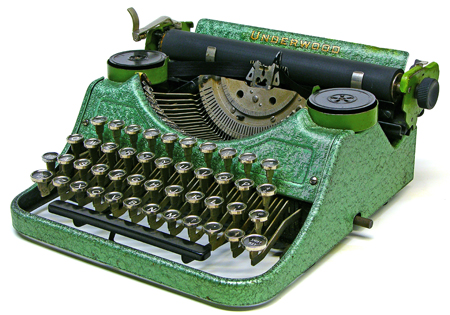
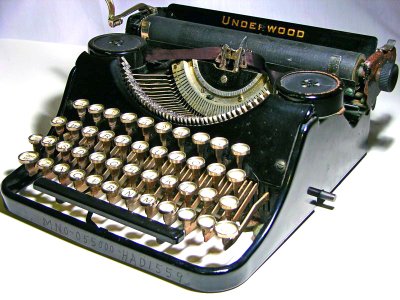
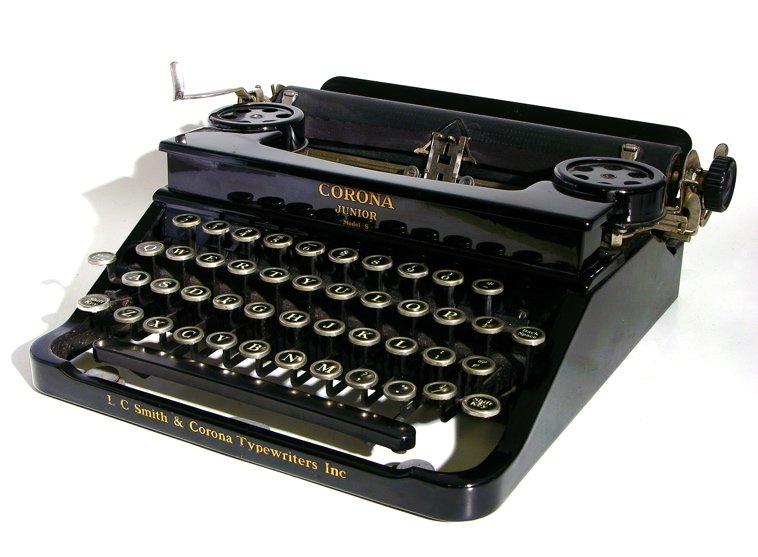
Though unlabeled, the lack of backspace, tab, or margin-release keys says that these must be the Underwood Junior. Like the Corona Junior and Royal Signet, the Underwood Junior was a no-frills, low-cost depression-era portable. |
Underwood Noiseless Portable
Serial # P1171091
1941
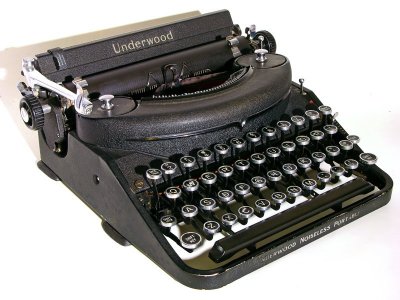
Made from 1931-'42. A clone
of the Remington Noiseless Portable, built at Remington's Ithaca, NY, factory through
a licensing deal. |
|
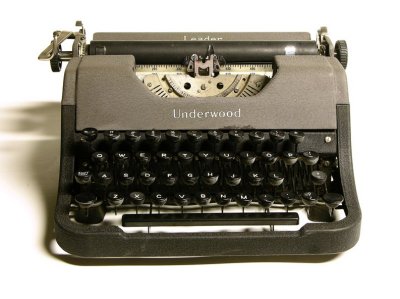
Underwood Leader
Serial # L48632
c.late 1940s
 |
Underwood "Rhythm Touch"
Serial # 11-7169966
1952
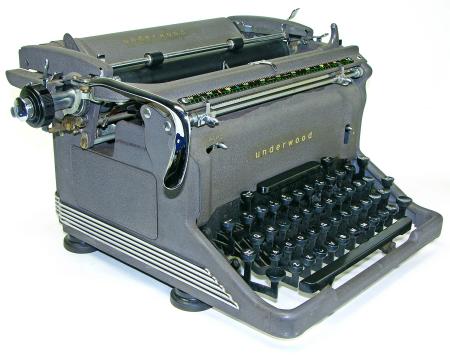
The model name of this Underwood standard is not labeled anywhere on the machine. Ads depicting it call it the "Rhythm Touch", though that probably applies more to its key action mechanics than the typewriter itself. Nonetheless, lacking a more official name, Rhythm Touch is what most collectors call this model.
I was surprised to find that this specimen dates to the early 1950s, because it looks much older. I obtained it from a woman whose mother taught typing classes at a Wisconsin business school. Other than a few cobwebs, it's been extremely well cared-for and types like a dream.
|
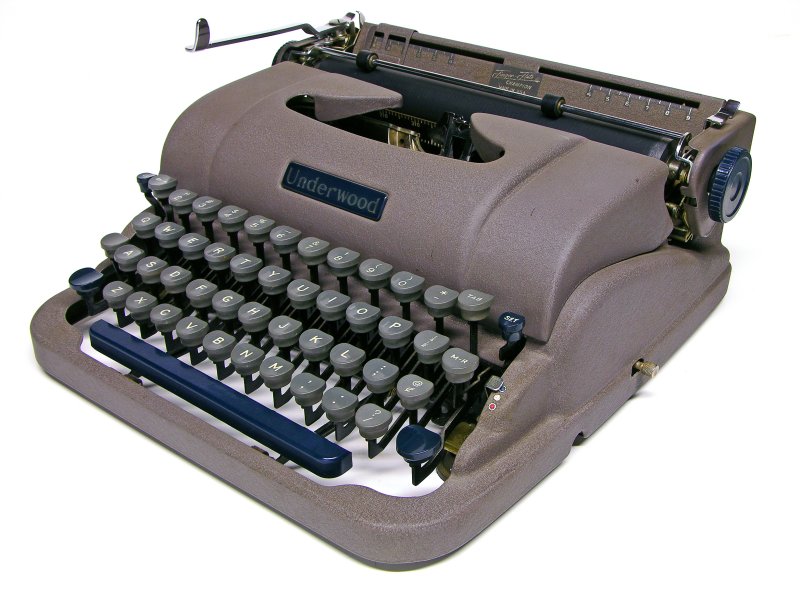
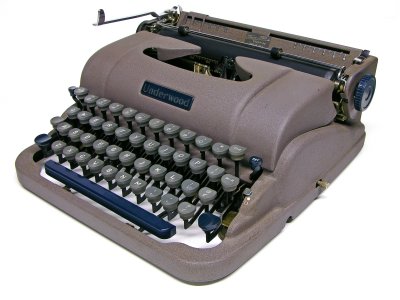
Underwood Finger-Flite Champion
Serial # L2230207
1952
|
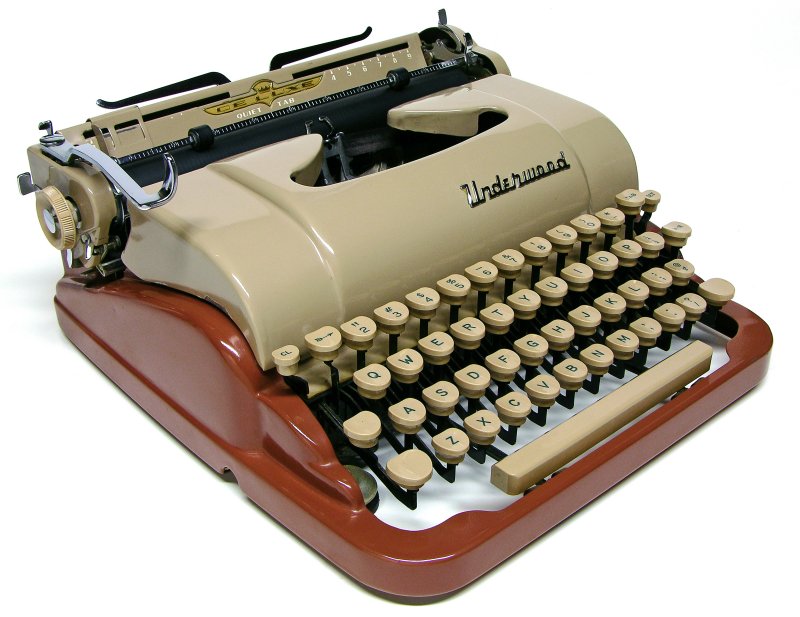
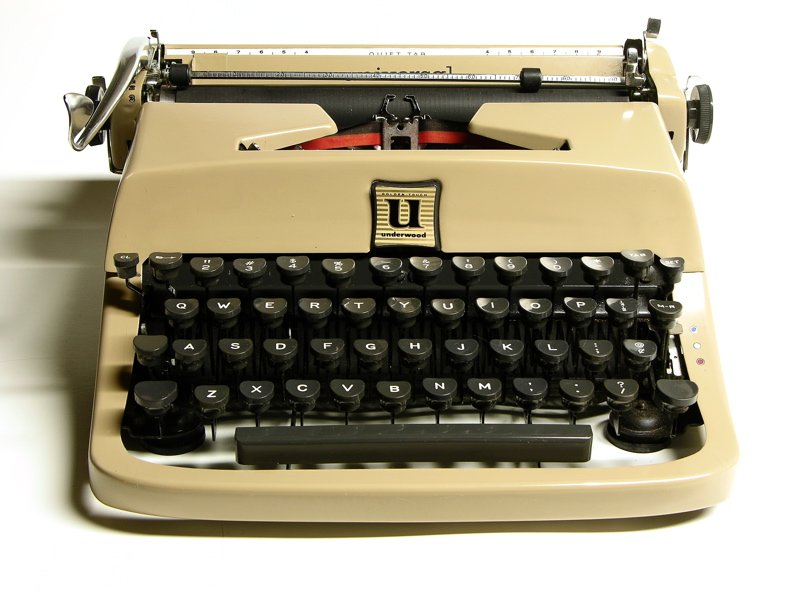
Underwood De Luxe Quiet Tab
Serial # A2561816
1956
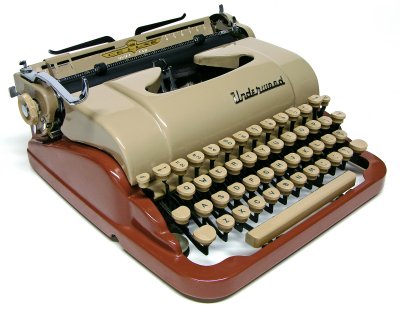
As you can see, this early version of the De Luxe Quiet Tab is closely related in body style to the Finger-Flite. Apart from the De Luxe's cosmetic upgrade, the two are virtually the same machine. The only major functional improvements are the addition of wing-like paper supports, a metered paper pail, and a variable line spacer.
Download the manual for this typewriter here.
|
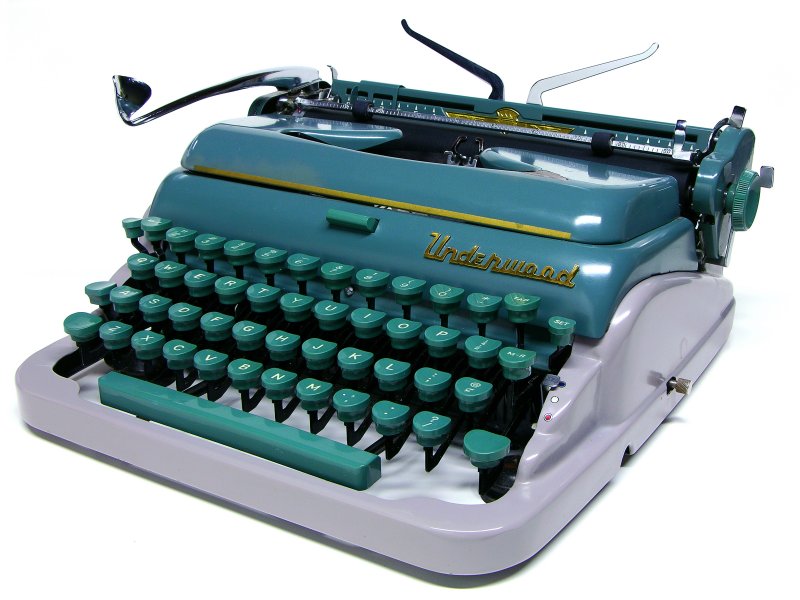
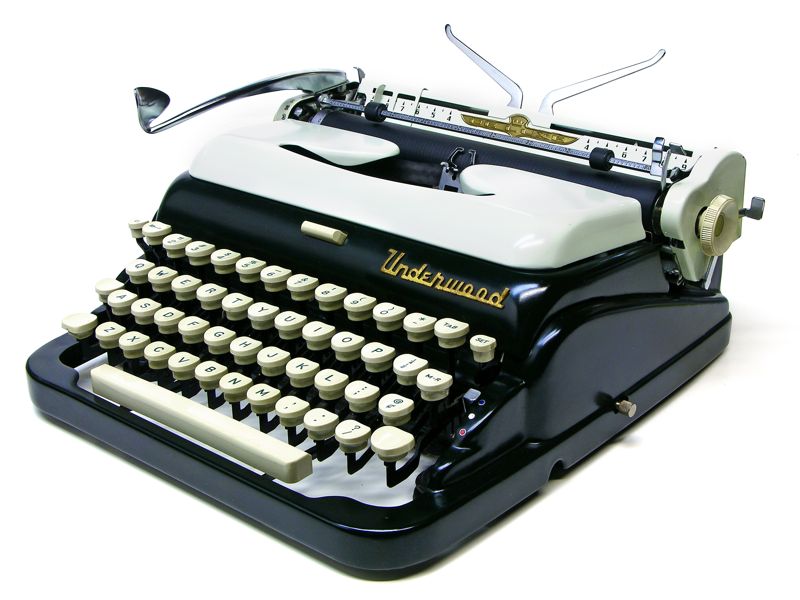
Underwood De Luxe Quiet Tab
Serial #s AA2664270 & AB2685728
1956
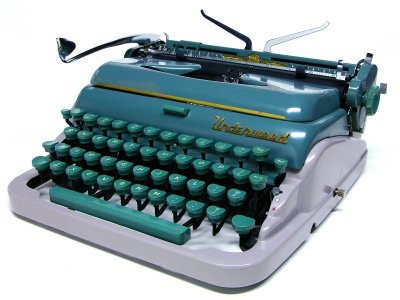
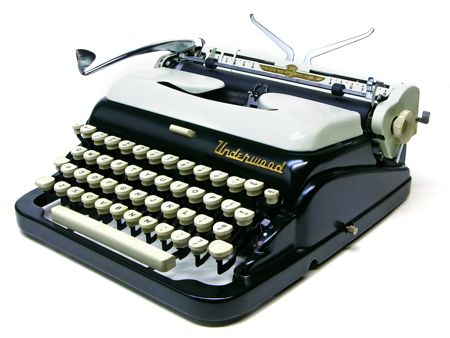
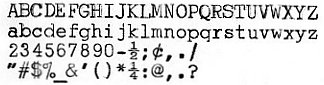
This second version of the De Luxe Quiet Tab is probably the flashiest typewriter Underwood ever produced. The influence of contemporary automobile design is obvious. Slight changes were made to the top half of the shell. Note the button to release the ribbon cover and the swoopy carriage return lever. Not immediately apparent is a new geometric slab serif typeface--apparently based upon Memphis--that is more modern and artistic while still being professional enough for business use.
Unlike the previous De Luxe Quiet Tab, this version was available in dual two-tone color schemes: green and grey, and black and white. These models have two leading letters in the serial #--the first A indicates the De Luxe Quiet Tab line, and the second indicates the color: A for green, B for black.
This is a weighty machine, more desktop than portable, with a solid key touch to match. |
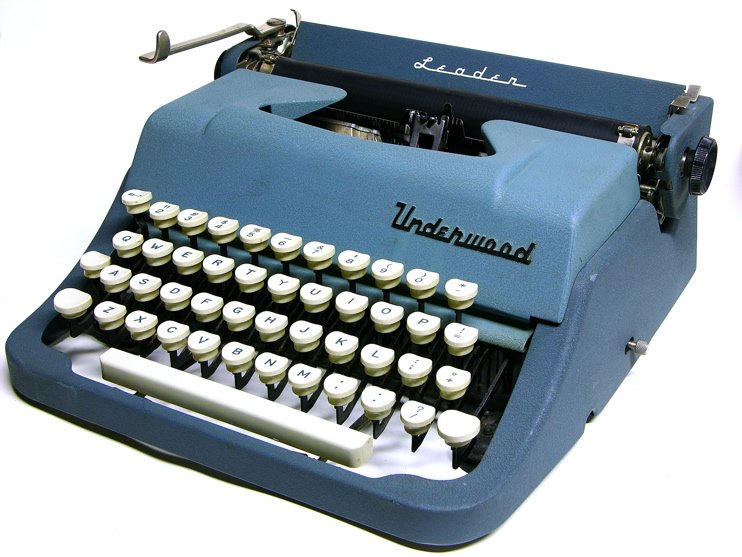
Underwood Leader
Serial # CA2602342
1956
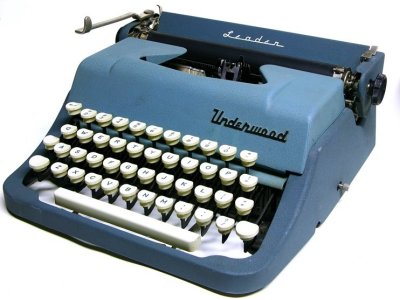
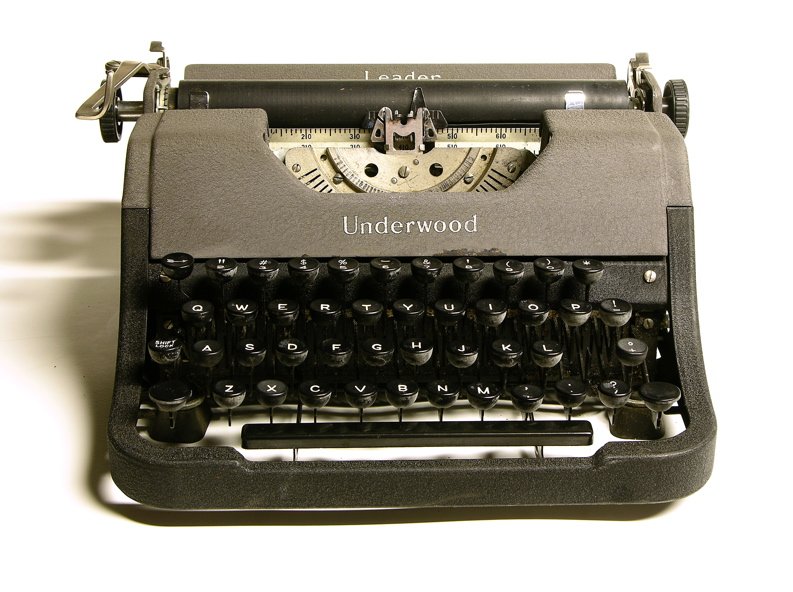
Some people dislike the post-war Underwoods, citing a flimsy touch and awkardly-placed controls. I tend to not agree with them except when I use this machine. It rattles like a Model T on a washboard road, and has a keyboard touch only slightly more subtle than hailstones upon a steel-sided house. It displays well, but then the De Luxe Quiet Tab both displays better and types better. The Leader is only for the completist collector or the self-abusive tortured writer. |
Underwood Universal
Serial # BF2871953
c.1958
Emeritus collection.
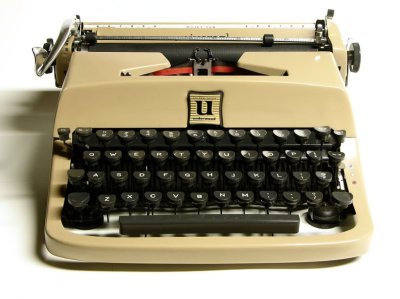
Note that the "U" doubles as a push-button ribbon cover release. This body style was among the last of the "true" Underwoods. In 1963, Olivetti bought stock in Underwood, the beginnings of an eventual merger. As we'll see below, Underwoods gradually became Olivettis in diguise.
|
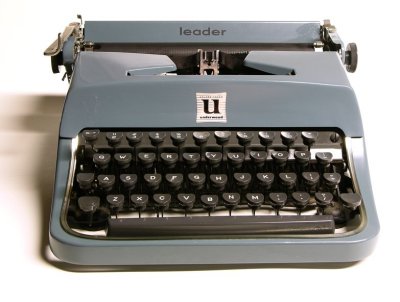
Underwood Leader
Serial # CE2957563
1959
Emeritus collection.
|
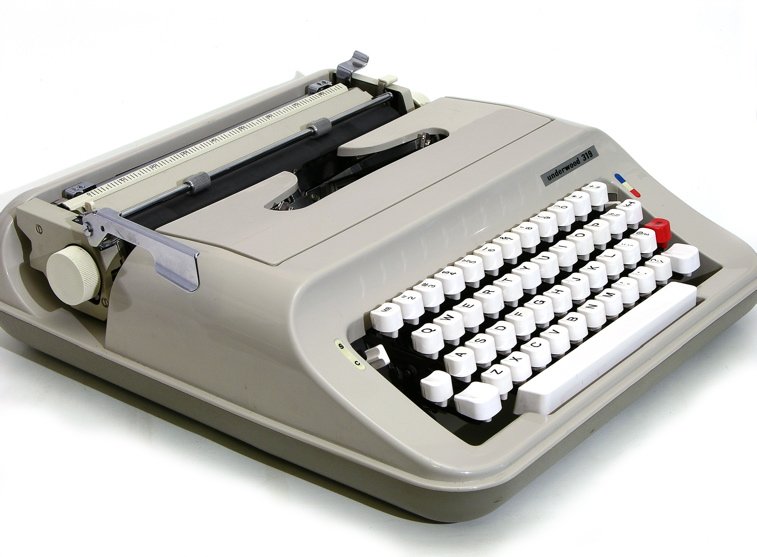
Underwood
319
Serial # 7500251
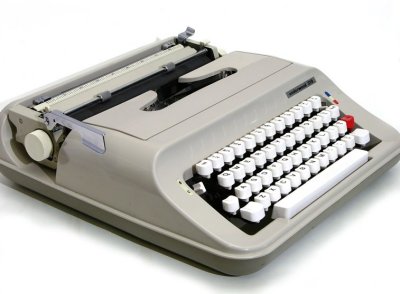
Nearly two decades after their merger with Underwood and eventual erasure of the name in the 1960s, Olivetti briefly revived the Underwood brand in the 1980s. Many, such as this one, were made in Spain and shared their designs with other Olivetti machines. This particular machine is a clone of the Olivetti Lettera 92. Included here as a curiosity, as the '80s Underwoods have about as much relation with the original Underwood company as today's Indian motorcycles have with their famous predecessors. |
|